5 Customer Messaging Errors and How to Fix Them | 2026
Avoid costly messaging mistakes that frustrate customers. Discover the top 5 errors businesses make, stats on response times, and simple fixes with Kuikwit to boost retention.


Imagine Aaron. He runs a growing online gadget store. Business is good, orders are coming in, ads are working. But on a busy Monday morning, his phone starts buzzing and doesn’t stop. Instagram DMs asking about delivery. Emails complaining about slow replies. WhatsApp full of “Where’s my order?” messages.
By lunchtime, the tone changes. Customers follow up. Some repeat themselves. Others don’t bother. A few new leads quietly disappear because no one replied fast enough.
Across town, a much larger retailer is dealing with even more messages. But they’re calm. Every message lands in one place. Replies are quick. Context is never lost. Customers feel heard. Repeat purchases keep climbing. The difference isn’t effort. It’s fixing messaging mistakes early and using the right tools, like Kuikwit, to manage everything in one place.If messages are piling up, complaints are growing, or leads are slipping away, chances are your business is making one (or more) of the messaging mistakes below.
What Messaging Mistakes Really Are
Messaging mistakes aren’t dramatic failures. They’re small, everyday problems that quietly add up. Slow replies. Inconsistent tone. Losing context when customers switch channels. Messaging trends 2026 show that generic responses that feel cold and messages that slip through the cracks are becoming major friction points for brands trying to keep customers engaged.
Each one chips away at trust. And once trust weakens, revenue usually follows.
Why Messaging Errors Cost More Than You Think

Customers today expect speed. A lot of it. Studies show most people expect a reply within an hour, especially over email. Yet the average response time is closer to half a day. That gap hurts.
Text and messaging apps are even more unforgiving. Messages get read almost instantly. When no reply comes, frustration builds fast. Businesses that rely only on email or delay responses often lose customers not because of bad products, but because communication felt slow or careless.
Messaging Mistake #1: Slow Response Time
Waiting too long to reply is one of the quickest ways to lose a customer. It doesn’t matter if you’re small or large. People assume silence means you don’t care.
The fix isn’t hiring more people right away. It’s visibility. When all messages from email, chat, and social platforms land in one inbox, nothing gets missed. That shift toward messaging trends for 2026 makes it easier to respond faster and stay consistent. Even a short acknowledgment helps. Customers mostly want reassurance that someone is there.
Messaging Mistake #2: Inconsistent Tone
One reply feels friendly. Another sounds stiff. A third feels rushed. When tone changes depending on the channel or the person replying, the brand feels unstable.
Consistency builds confidence. That doesn’t mean sounding robotic. It means agreeing on how your business speaks. Friendly but professional. Clear, not cold. Templates help, as long as they’re used thoughtfully and adjusted when needed.
Messaging Mistake #3: Ignoring Channel Preferences
Some customers email. Others text. Many prefer social DMs. Problems start when businesses force everyone into one channel or ignore messages where customers expect fast replies.
The solution is presence without chaos. Be where customers already are, but manage everything in one place. When channels are connected, replies stay timely and consistent without overwhelming your team.
Messaging Mistake #4: No Personalization
“Dear customer” rarely makes anyone feel valued. Generic replies signal distance. Customers want to feel recognized, especially when they’ve bought before.
Personalization doesn’t need to be complicated. Using a name. Referencing a previous order. Acknowledging a past question. When conversation history is visible, personal replies become natural instead of forced.
Messaging Mistake #5: Losing Context Between Channels
This one frustrates people the most. A customer explains an issue on Instagram, then switches to email and has to explain it all over again. Trust drops instantly.
Unified message history fixes this. When every reply has context, conversations feel continuous instead of fragmented. Customers feel remembered. Teams feel less stressed.
Why Fixing Messaging Mistakes Matters at Every Size
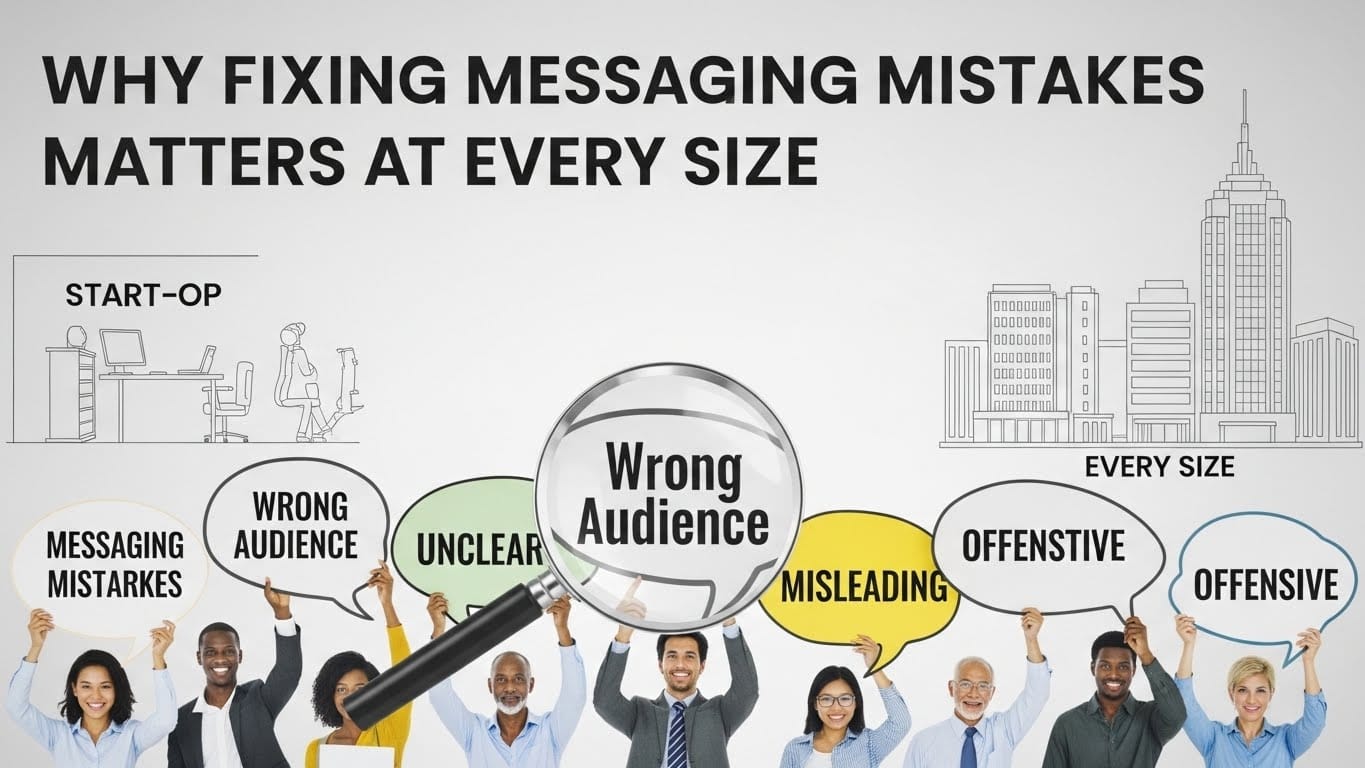
For small businesses, every missed message feels bigger than it should. One unanswered DM or delayed reply can quietly undo weeks of trust-building. Customers don’t usually complain. They just move on, and often for good. When your business is small, each interaction carries weight, and gaps in communication show up fast.
For larger businesses, the problem looks different but hits just as hard. Mistakes don’t stay isolated. Delays spread across teams, inconsistencies confuse customers, and lost messages multiply across channels. What starts as a small breakdown turns into churn, support overload, and reputational drag.
When messaging is fixed, both ends of the spectrum benefit. Small businesses gain consistency, credibility, and stronger customer relationships. Large businesses unlock efficiency, clarity, and scale without chaos. The size of the operation changes. The principle doesn’t.
The Bigger Picture
Messaging mistakes seem small. A delayed reply. A generic response. A missed DM. But together, they shape how customers feel about your brand.
Fixing them doesn’t require huge budgets or complex strategies. It requires clarity, consistency, and the right system. Tools like Kuikwit help by keeping everything in one place, preserving context, speeding up replies, and letting teams focus on real conversations instead of chaos.
Final Thoughts
Customers don’t expect perfection. They never really have. What they expect is responsiveness. A sign that someone is paying attention. Clear answers, even if the answer is “we’re checking.” Most of all, they expect to feel heard, not shuffled around or ignored while their message disappears into a void.
When messaging works, everything else starts to feel lighter. Conversations move forward instead of stalling. Trust grows in small, almost invisible ways. Complaints drop because confusion drops first. Loyalty builds quietly, without campaigns or slogans, just through consistent, human responses that make people feel respected.
And businesses stop losing customers for reasons that had nothing to do with product quality, pricing, or effort. They stop losing people because of silence, delays, or crossed wires. If messaging feels messy right now, that’s not a failure. It’s a signal. And signals are useful. They point to what needs attention. And this one, thankfully, is fixable.
FAQs — People Also Ask
What are messaging mistakes in customer support?
They include slow replies, inconsistent tone, ignoring customer-preferred channels, lack of personalization, and losing conversation context.
Why do slow replies hurt businesses so much?
Because customers expect quick responses. Long waits signal poor service and push people toward competitors.
Can small businesses really manage omnichannel messaging?
Yes. With the right tools, small teams can handle multiple channels without added complexity.
How does unified messaging improve customer experience?
It keeps all conversations in one place, prevents missed messages, and allows agents to respond with full context.
Is fixing messaging mistakes expensive?
Not necessarily. Often, better systems and clearer processes make the biggest difference, not bigger teams.