CRM Solutions For Commercial Real Estate Teams in 2026
Deals take months in commercial real estate. Contacts pile up. Follow-ups slip. This post covers the best CRM solutions for commercial real estate in 2026 and why US pros are using tools like Kuikwit.


I will be straight with you. Commercial real estate scared me for a long time. All those terms, all those zeroes on the price tags, and everyone talking about cap rates like it was something you should have learned in school. But once I actually sat down and pulled the whole thing apart, it started making a lot more sense. At its core, we are talking about properties people use for business. Offices. Shops. Warehouses. Apartment blocks with five units or more. If you have been circling this space wondering whether to jump in, or you just want to understand what the fuss is about, stick around. I am going to break it down the way I wish someone had broken it down for me.
What is commercial real estate, really? Alright so strip away all the fancy language and it is property that exists to make money or run a business. Office towers, shopping centres, big industrial warehouses, apartment buildings once you get past four units. It is a different animal from residential. The loans work differently. The regulations are different. The way you manage tenants is completely different. People lump all real estate together but honestly the gap between buying a house and buying a retail strip is enormous. They almost feel like separate industries once you get into it.
Is it actually worth getting into? Depends on you. And I mean that genuinely. The returns can blow residential out of the water. I have seen deals where someone is pulling eight, nine, ten percent cash-on-cash while their mate with a rental house is scraping four. But the flip side is real too. The upfront money is bigger. The problems are more expensive. You are not calling a handyman when the roof leaks on a sixty thousand square foot warehouse. You are calling a contractor and writing a very large cheque. Some people love that game. Others lose sleep over it. Know yourself before you jump.
How does the investing part actually work? Simplified version. You buy a building, you find businesses to rent space in it, they pay you every month. Done. Except it is never that clean. You have got triple net leases where the tenant covers taxes, insurance, and maintenance on top of rent. Gross leases where you eat most of those costs. Percentage leases where you get a slice of the tenant's revenue. Each structure changes your math completely. And speaking of math, you need to get comfortable with cap rates, net operating income, and debt service coverage ratios. If those words make you nervous, that is fine. They made me nervous too. But you cannot skip them.
How the Real Estate Market Actually Operates

Here is something that took me way too long to figure out. The real estate market is not one market. It is thousands of tiny markets all doing their own thing. Sure, interest rates affect everyone. When borrowing gets cheap, more people buy stuff. When rates go up, people get cautious. That part is universal. But beyond that? A warehouse district outside Melbourne behaves nothing like a retail strip in suburban Sydney. The vacancy rates are different. The tenant profiles are different. The growth trajectory is different.
I made the mistake early on of reading national headlines and assuming they applied to the specific building I was looking at. They did not. Not even close. The suburb I was interested in was losing population while the national news was talking about a property boom. Two completely different realities. So here is my advice and it is boring but true. Talk to brokers who work in that specific area. Not the city. The actual neighbourhood. Look at vacancy numbers for that postcode. Check what the council has planned for zoning changes. That ten minutes of local research will save you from a world of pain that no amount of podcast listening will prepare you for.
Why a Real Estate Agent Still Matters in Commercial Deals
I know. Everyone thinks they can YouTube their way through a commercial deal these days. And look, some people genuinely can. If you have done a dozen deals and you know the market inside out, maybe you do not need an agent. But most people? Most people are not in that position. A solid commercial real estate agent who actually works that specific market every single week brings intel you simply cannot Google. They know which building on Smith Street has had water damage claims that the seller is not advertising. They know that the landlord two blocks over will negotiate tenant improvements if you push.
They know the per-square-foot rate for a Class B office in your target area has been creeping down for six months even though listings still show last year's numbers. That kind of information is worth the commission. It really is. The alternative is buying something that looks perfect in the photos and then discovering three months later that the HVAC is shot and the anchor tenant is planning to leave. Not every agent is good though. I want to be clear about that. Ask them specifically about commercial deals they have closed recently. A residential agent who dabbles in commercial on the side is not the same thing. Not even close.
Colibri Real Estate and Getting Your Licence
If you are thinking about flipping to the other side of the table and becoming a licensed real estate professional, Colibri Real Estate is probably a name you have already come across. They are one of the bigger online education platforms for pre-licensing and continuing education courses. Cover most states if you are in the US. Flexible scheduling which matters a lot if you are trying to study while holding down a day job. I will say this about their courses. They are not exciting.
Nobody is going to binge them like a Netflix series. But they are thorough. And in this industry I would rather have thorough than entertaining. The exam prep material is decent and their pass rates are respectable. But here is the thing people miss and I wish more course providers were honest about this. Getting the licence is just the start. It is the learner's permit. The real education kicks in when you start sitting across the table from someone negotiating lease terms and you realise the textbook did not quite cover this scenario. Colibri gives you the foundation. A solid one. But you build the house yourself through actual deals, actual mistakes, and actual late nights wondering if you made the right call.
What Does Contingent Mean in Real Estate?
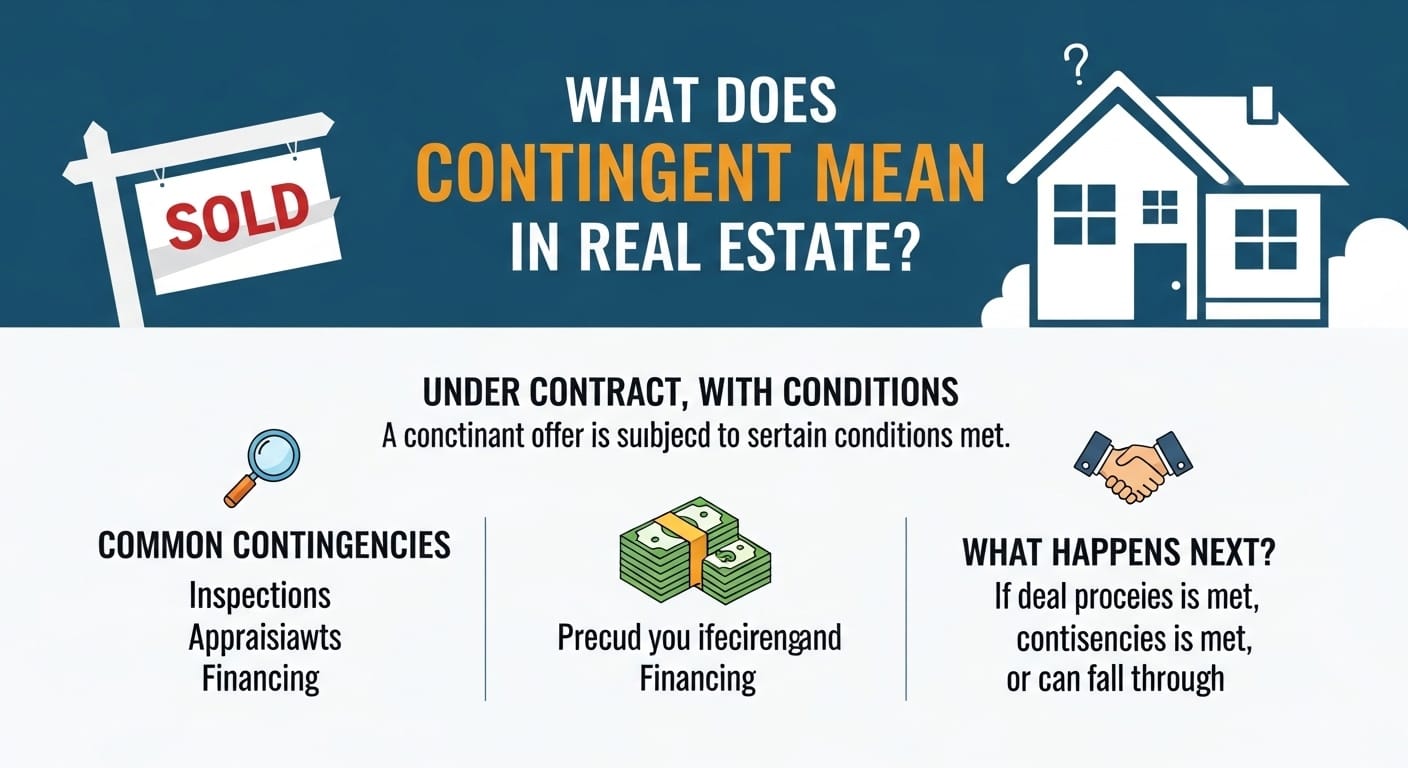
You will run into this word constantly if you start browsing property listings. Contingent. What does contingent mean in real estate? Basically the property is under contract but the deal is not sealed yet. There are conditions hanging over it. Inspections that need to pass. Financing that needs final approval. An appraisal that needs to come back at the right number. Until every single one of those boxes gets ticked, the whole thing could collapse. In commercial deals the contingencies get even more layered. You might be waiting on environmental assessments to make sure the soil is not contaminated.
Zoning verification to confirm you can actually use the building for what you planned. Tenant estoppel certificates to verify the existing leases are what the seller claims they are. Each contingency is basically an escape hatch for the buyer. Sellers hate that uncertainty, which is fair. But from a buyer's seat, contingencies are your armour. You would not hand over two million dollars for a warehouse without knowing if there is a chemical spill underneath it. That is the whole point. Contingencies give you a structured, legal way to walk away if the deal turns sour before you close.
Mark Spain Real Estate: A Different Approach
Mark Spain Real Estate has carved out a pretty interesting niche, mainly in residential, with their guaranteed offer programme. Now you might wonder why I am bringing up a residential-focused outfit in a commercial real estate article. Fair question. The reason is their model represents something bigger. They have figured out how to strip a lot of the uncertainty out of selling a property. Guaranteed offer. You know what you are getting. You know the timeline. Done. That concept of reducing friction in a transaction is something the commercial world desperately needs to pay attention to.
Commercial deals are painfully slow. Due diligence alone can drag on for months. Any business model or technology that can speed things up without skipping the important checks is worth watching closely. Mark Spain operates mainly in the southeastern United States so their geographic footprint is limited. But brokerages all over the country are studying what they built. Whether you ever interact with them directly or not, understanding their approach tells you something about where the whole industry is heading. Faster. Smoother. More predictable. That is the direction.
Real Estate Investing Tips That Actually Hold Up Over Time
The internet is drowning in real estate investing tips. Podcasts, YouTube gurus, courses that cost five grand and mostly tell you stuff you could have found for free. Some of it is genuinely helpful. A lot of it is the same recycled advice wearing a new outfit. So let me skip the fluff and tell you what has actually mattered in deals I have been close to. First and foremost, know your numbers cold before you commit to anything. Cap rate. Cash flow projections. Debt service coverage ratio. These are not optional boxes to check after you have already fallen in love with a building. They come first. Always. Second, location research goes so much deeper than just driving through the area and thinking oh this looks nice.
Pull up population growth data. Check if there are infrastructure projects planned nearby. A warehouse two blocks from a new highway interchange is worth dramatically more than the same warehouse without that access. Third thing. Do not over-leverage. I know it is tempting to put down the bare minimum and finance everything else. But if your tenant leaves and you are sitting on a massive mortgage with no rental income covering it, things go bad fast. Keep reserves. Actual cash reserves, not theoretical ones. And lastly, build your network like your business depends on it, because it does. Lenders, inspectors, attorneys who specialise in commercial properties, brokers who know specific markets. Those relationships are not a bonus. They are infrastructure.
CRM Solutions for Managing Real Estate Relationships

Once you start scaling in this business, whether you are investing, brokering, or managing properties, keeping track of everything in your head stops working. Quickly. You have got brokers, lenders, tenants, contractors, attorneys. Each one is on a different timeline. Each one needs something different from you. And the deals themselves can take months to close with dozens of moving parts. This is where CRM solutions become genuinely essential. Not a nice-to-have. Essential.
Customer relationship management software puts all your contacts, all your deal stages, all your follow-ups in one place. Without it, things fall through the cracks. That lease renewal you meant to bring up three months ago? Forgot. That investor who showed interest at a conference in April? Lost their card. That contractor who gave you a great quote but you could not remember their name? Gone. A proper CRM prevents all of that. And the data it builds up over time is gold. You start spotting patterns in your own pipeline. You see which lead sources actually convert. You notice that deals in a certain property type always stall at the same stage. That information shapes your strategy going forward in ways gut instinct alone never could.
CRM Software Solutions Worth Actually Exploring
The CRM software solutions market is massive and honestly kind of overwhelming when you first look at it. You have got the big general platforms like Salesforce, HubSpot, and Zoho that can be moulded to fit almost any industry. Then there are niche tools built specifically for commercial real estate people like Buildout, REThink, and ClientLook. Which one is right for you depends entirely on what your operation looks like today.
Solo investor with five properties? HubSpot's free tier honestly might be more than enough. Running a brokerage with twenty agents who all need deal tracking and pipeline visibility? You need something heavier. But here is a mistake I see constantly. People buy the most expensive platform assuming it must be the best. Then six months later they are using maybe fifteen percent of the features and paying for the other eighty-five percent every month. Start with what you actually need right now. Most of these platforms offer free trials. Use them. Click every button. Try building your actual workflow in the system before you hand over your credit card details. Scale up later when you genuinely need more.
Custom CRM Solutions: When the Generic Stuff Falls Short
Sometimes the off-the-shelf options just do not fit. Maybe your deal pipeline has unusual stages. Maybe you need integrations with tools that standard CRMs do not support. Maybe your reporting requirements are weirdly specific because of how your fund is structured. That is when custom CRM solutions start looking attractive. Building a tailored system, or heavily customising an existing one, means the software moulds around your process instead of you contorting your workflow to fit the software.
In commercial real estate where every deal structure seems to have its own personality, that flexibility genuinely matters. The downside is obvious though. Cost. Custom development is not cheap and the maintenance never really stops. But for larger operations managing diverse portfolios across multiple property types, the efficiency gains tend to justify it. Platforms like Kuikwit offer an interesting middle ground here. Rather than being a full CRM replacement, Kuikwit works as a centralised communication dashboard pulling in messages from WhatsApp, Facebook, Instagram and other channels into one inbox. For real estate professionals who handle tenant and client communications across multiple platforms, that integration layer can complement whatever CRM you are running.
Smart chat assignment means inquiries go to the right person automatically. AI auto-replies handle common questions when your team is unavailable. And the analytics give you visibility into response times and conversation patterns. The key with any custom or hybrid approach is figuring out exactly what you need before anyone starts building. Scope creep in software projects is real and it is expensive. Define your must-haves, your nice-to-haves, and stick to that list.
Comparing Property Types in Commercial Real Estate
|
Property
Type |
Typical
Lease |
Cap Rate
Range |
Risk Level |
Good For |
|
Office |
3-10 years |
5-8% |
Medium |
Folks wanting steady income |
|
Retail |
5-15 years |
5-9% |
Medium-High |
Location-obsessed investors |
|
Industrial |
5-10 years |
4-7% |
Low-Medium |
Long game players |
|
Multi-Family |
1-2 years |
4-8% |
Medium |
Cash flow chasers |
|
Hospitality |
Varies a lot |
6-12% |
High |
Experienced operators only |
Mistakes That Burn New Investors (I Have Seen Every One of These)
The biggest one and I cannot say this loud enough. Falling in love with a property before you have run a single number. It happens all the time. Someone walks through a gorgeous old converted warehouse, starts imagining their name on the building, and completely skips the financial analysis. Then three months after settlement they discover the HVAC system is dying, the roof has been patched so many times it looks like a quilt, and the zoning does not actually allow the use they had planned.
Expensive lesson. Another mistake that gets people is underestimating operating expenses. New investors budget for the mortgage and then forget that property taxes go up. Insurance premiums climb. Maintenance does not stop just because you budgeted for it to stop. Those costs chip away at your cash flow every single month and they are relentless. Vacancy is another one. If your projections assume the building stays full all year every year, you are living in a fantasy. Budget for vacancy. Ten to fifteen percent is a reasonable cushion depending on your market.
Where Things Are Heading Honestly
The commercial real estate landscape keeps moving underneath everyone's feet. Remote work scrambled the office sector in ways nobody really predicted even two years ago. E-commerce reshaped retail and turned industrial into everyone's favourite asset class overnight. Interest rates keep jerking the pace of transactions around like a puppet. But through all that noise, the fundamentals stay put. Location still matters most.
Cash flow is still king. Due diligence still separates the winners from the people writing angry posts online about how real estate is a scam. Relationships still open doors that cold calls never will. If you are just getting into this, here is my honest suggestion. Pick one property type. Just one. Learn it deeply. Understand the lease structures, the tenant behaviour, the typical maintenance costs, the financing quirks. Talk to people who have been doing it for twenty years and actually listen to what they say. Read the lease agreements even when they bore you to tears. Visit properties in person. The best education in commercial real estate is not a course. It is not a book. It is not a podcast. It is getting your hands dirty, making a few mistakes that cost you money, and getting better because of it.
Frequently Asked Questions
How much money do you realistically need to get into commercial real estate? It ranges wildly. A small multi-family property might need fifty to a hundred thousand as a down payment. A decent office building or retail centre? You are looking at millions. But there are other routes in. Real estate investment trusts let you invest with much less. Syndications sometimes accept five or ten thousand. The barrier is definitely higher than buying a rental house, but there are more doors into this space than people realise.
What is the actual difference between commercial and residential? Usage, basically. Residential is where people live. Houses, duplexes, small apartments. Commercial is where business happens or where you have five plus residential units. But the differences go way deeper than that. The financing is structured differently. The leases are longer and more complex. The way you value the property uses different math. Even the regulations governing each are separate worlds. It is not just a bigger version of residential. It is a different game entirely.
Can you explain cap rates like I am not a finance person? Sure. Take the annual income a property generates after expenses. Divide that by what you paid for it. That percentage is your cap rate. Higher cap rate usually means higher returns but also more risk. Lower cap rate means more stability but less upside. It is a quick and dirty way to compare two different properties. Useful? Yes. But never use it as your only metric. It does not account for financing, future growth, or a dozen other things that matter.
How are commercial leases different from renting a flat? Night and day honestly. Commercial leases run much longer, anywhere from five to fifteen years. The terms are heavily negotiated. In a triple net lease the tenant pays taxes, insurance, and maintenance on top of rent. In a gross lease the landlord swallows most of those costs. There are percentage leases where rent includes a cut of the tenant's sales. You can negotiate build-out allowances, rent escalation schedules, early termination clauses. It is a proper negotiation, not just sign here and move in.
I have zero experience. Can I still invest in commercial real estate? You can but go in with your eyes open. The learning curve is steep and the mistakes are expensive. Lots of beginners start through REITs or crowdfunding platforms where professionals manage everything. If you want to buy directly, seriously consider partnering with someone experienced on your first deal. The tuition you pay in avoided mistakes is worth whatever share of the profits you give up.
What are the scariest risks in commercial real estate? Vacancy tops the list. Empty space earns nothing but still costs you money every month. Market downturns can crush property values and rental rates simultaneously. Tenants can default on long leases leaving you scrambling. Environmental contamination can show up unexpectedly. Zoning rules can change. Interest rates can spike and wreck your refinancing plans. And over-leveraging, carrying too much debt with too little cushion, that is probably the one that destroys the most people. Leave yourself room to breathe.
How does commercial financing actually work compared to a normal mortgage? Banks care a lot more about the property's income than your personal situation. They want to see that the building can service the debt on its own. Loan terms are shorter, usually five to twenty years, often with balloon payments at the end. Down payments run twenty to thirty-five percent typically. Interest rates tend to be higher than what you would get on a home loan. The paperwork is more intense and approval takes longer. SBA loans, conventional bank financing, and CMBS loans are the main options most people look at.