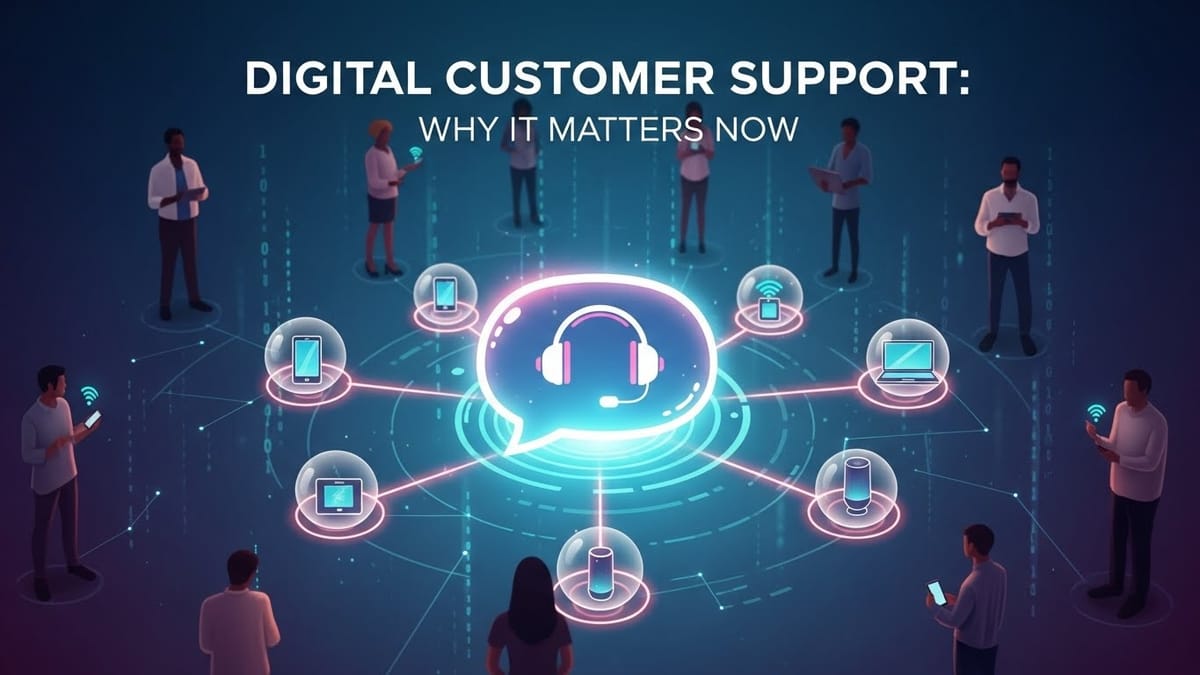
Digital Customer Support: Why It Matters Now 2026
Digital customer support is no longer about waiting. It’s about real-time conversations, faster responses, and meeting customers where they already are. Businesses that adapt build trust, while those that don’t risk falling behind.

Customer support isn’t what it used to be, and most people don’t need a chart or a case study to realize that. They feel it the moment they interact with a brand. Long call queues, robotic IVR systems, scripted replies that don’t quite answer the question—those experiences haven’t just become annoying. They’ve become unacceptable.
Something fundamental has shifted. And that shift isn’t about attitude or customer impatience. It’s about how the world itself now operates.Support has gone digital because people have gone digital. And once that happened, everything else followed.
The End of Waiting as a Customer Experience
There was a time when waiting was expected. You called a helpline, you waited on hold, you listened to music that no one actually enjoyed, and eventually someone picked up. That was normal. Today, it feels almost absurd. In a world driven by instant messaging, AI chatbots, and real-time customer engagement, even a few seconds of delay can cost trust, attention, and conversions — which is why modern brands now focus on boosting sales through real-time customer interaction instead of outdated support systems.
Modern customers live in a world of instant delivery, instant payments, instant messages, and instant updates. Waiting is no longer neutral. It’s interpreted as neglect.
When someone reaches out for help now, they’re not asking for a favor. They’re continuing a conversation they believe should already be happening. If that conversation stalls, trust erodes quietly but quickly.This is one of the most important reasons digital customer support has taken over. Not because it’s trendy, but because it aligns with how people already live.
People Are Always Online—So Support Has to Be Too

Most interactions now happen on screens we carry everywhere. Phones aren’t devices anymore; they’re extensions of daily life. Shopping, work, communication, entertainment—it all happens in the same place.
So when customers need support, they expect it on the same platforms. WhatsApp. Instagram. Facebook Messenger. Website live chat. Not a separate system. Not an email ticket buried in an inbox.
Businesses that understand this don’t force customers to switch channels — they adapt to them. They show up where attention already exists, instead of demanding it be redirected. That’s why using conversational platforms and messaging-first strategies has become essential for brands that want to stay relevant. Tools that focus on real-time communication and seamless interaction play a major role in shaping trust and loyalty — especially when businesses know how to improve customer experience with messaging tools.
And that presence matters more than most brands realize. Being available in the right place feels respectful. Being absent feels dismissive.
Response Time Has Become a Measure of Credibility
Speed is no longer just a performance metric. It’s a signal. When a brand responds quickly, it communicates competence. When it doesn’t, customers start questioning reliability—even if the product itself is solid.
This is where digital tools reshape the game. Automation, AI-powered replies, intelligent routing, and real-time notifications allow businesses to respond instantly without overwhelming their teams.
A fast response doesn’t mean a rushed one. It means acknowledgment. It tells the customer: We see you. You matter. We’re here.That alone changes the emotional tone of the interaction.
Automation Isn’t About Replacing Humans
There’s still a lot of misunderstanding around automation in customer support. Some people assume it removes empathy. Others fear it turns conversations into scripts.
In reality, good automation does the opposite. It removes repetition. It handles routine questions. It filters noise. And by doing so, it gives human agents more space to focus on conversations that actually require judgment, empathy, or creativity.
Automation isn’t the voice of the brand. It’s the infrastructure behind it.Tools like Kuikwit exist to support humans, not erase them. The goal isn’t to sound robotic. The goal is to sound present—even at scale.
Every Message Is a Decision Point
In digital customer support, no message is insignificant. Each one represents a moment of intent. A question about pricing. A concern about delivery. A hesitation before purchase.
Handled well, these moments convert. Mishandled, they disappear.Digital platforms allow businesses to track conversations, identify friction points, and refine responses over time. Support becomes less about reacting and more about learning.
This is where support quietly becomes a growth lever instead of a cost center.
Support Is No Longer a Department—It’s a Brand Signal
Customer support used to live in the background. Today, it’s front-facing. Often, it’s the first meaningful interaction someone has with a brand.How you respond. How fast you respond. Where you respond. All of it shapes perception.
A smooth, thoughtful support experience builds confidence far beyond the immediate issue. A frustrating one creates doubt that lingers, even after the problem is solved.
That’s why modern businesses treat support as part of brand infrastructure, not just operations.
Omnichannel Support Is No Longer Optional
Customers don’t think in channels. They think in conversations. They might start a question on Instagram, continue it on a website, and expect consistency throughout.
Managing that manually is nearly impossible. That’s why centralized platforms—often called chat home bases—have become essential.A single inbox. Shared context. Conversation history. Clear ownership. This is what allows teams to deliver continuity instead of confusion.
Without it, even the best intentions fall apart under scale.
Smart Tools Make Complexity Invisible

Digital support is complex under the hood. Multiple platforms. Different customer intents. Varying urgency levels.The best tools make that complexity invisible to the customer.
Platforms like Kuikwit help teams manage conversations across channels, automate intelligently, route messages to the right people, and analyze performance in real time. The result isn’t just efficiency. It’s calm.
And calm, in customer support, is priceless.
Personalization Is the New Baseline
Generic replies don’t land anymore. Customers know when they’re being treated like a ticket number.
Digital support tools now allow businesses to personalize conversations using history, preferences, and context. Not in a creepy way. In a helpful one.Remembering past interactions. Referencing previous purchases. Understanding tone. These details turn support into a relationship rather than a transaction.
Chat Is Replacing Email as the Default
Email hasn’t disappeared, but it’s no longer the first choice for support. It’s slow. Fragmented. Easy to ignore.
Chat, on the other hand, feels immediate and human. It mirrors how people already communicate with friends and colleagues. Short messages. Quick clarifications. Natural flow.
That’s why chat communication has become the preferred channel for modern support—and why businesses that invest in it see higher engagement and satisfaction.
The Rise of Virtual Chat Experiences
Virtual chat systems are evolving rapidly. AI is no longer limited to keyword matching. It’s moving toward intent recognition, sentiment analysis, and contextual understanding.The future of chat isn’t just about answering questions. It’s about anticipating needs.
Imagine a support system that recognizes hesitation and offers reassurance. That detects frustration and slows down the conversation. That adapts tone automatically.
That future isn’t distant. It’s already forming.
Chat Openings Matter More Than You Think
The first message sets the tone. A cold, generic opening gets ignored. A warm, relevant one invites engagement.Good chat openings don’t interrupt. They assist. They acknowledge context. They feel timely rather than intrusive.
This small detail often determines whether a conversation happens at all.
Support Teams Are Becoming Strategists
As digital tools handle more of the routine work, support teams are evolving. They’re no longer just responders. They’re analysts. Relationship builders. Insight generators.They see patterns. They understand objections. They influence product decisions.
Support is no longer reactive. It’s strategic.
Why Businesses That Delay Fall Behind
Digital support isn’t a future upgrade. It’s a current expectation.
Brands that delay adopting modern support systems often don’t fail dramatically. They fade quietly. Customers stop reaching out. Engagement drops. Conversions slow.The absence of good support doesn’t always create complaints. Sometimes it just creates silence.
Final Thoughts
Customer support is changing—and fast. But the direction is clear.
Digital-first support makes conversations faster, smarter, and more human, not less. It meets people where they already are and respects their time.
The businesses that embrace this shift don’t just improve service. They build trust at scale. They stay relevant. They grow.Those that don’t risk becoming invisible in a world that no longer waits.
FAQs — People Also Ask
Why is digital customer support important today?
Because customers expect instant, convenient help on platforms they already use, without delays or friction.
What channels matter most for modern support?
Live chat, WhatsApp, Instagram, Facebook Messenger, and website-based messaging.
Does automation hurt customer experience?
No, when implemented well. Automation improves speed and consistency while freeing humans for complex conversations.
What is omnichannel customer support?
It’s the ability to manage conversations across multiple platforms from one centralized system.
How do tools like Kuikwit help businesses?
They centralize chats, automate intelligently, provide analytics, and help teams deliver consistent, high-quality support at scale.