Master Your Clinic Workflow with Insight Go in 2026
Tired of being stuck at your desk long after the last patient leaves? Insight go is the mobile-friendly answer for rehab therapists who need to document on the move. By bringing the power of Clinicient’s EMR to your tablet or smartphone.

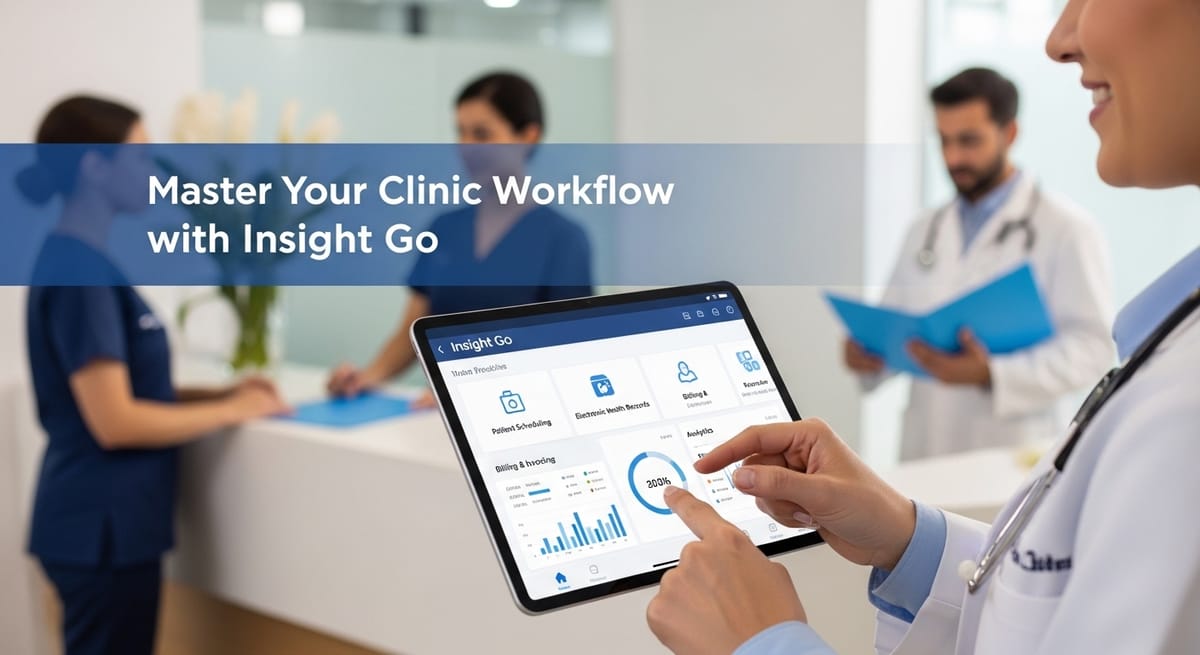
When you're trying to manage a busy physical therapy or rehab clinic, the last thing you want is to be tethered to a bulky desktop while your patients are moving around the floor. Using a mobile-friendly interface like insight go allows therapists to handle their documentation and schedules directly from a tablet or phone, making the transition from patient care to paperwork almost unnoticeable. It’s all about finding those little pockets of time during a session to stay on top of your notes so you aren't stuck at the office until 8:00 PM every single night.
What exactly is Insight Go by Clinicient?
It is basically a mobile-optimized, browser-based extension of the Clinicient Insight platform, specifically designed for therapists on the move. Instead of needing to download a clunky app, you just log in through your browser on any device like an iPad or a smartphone. It’s built to mirror the clinical workflow of physical, occupational, and speech therapists, allowing for real-time charting and schedule management right at the point of care.
Is making the switch to mobile documentation worth it?
Absolutely, because the biggest "time-thief" in a clinic is the gap between treating a patient and actually writing down what happened. When you wait until the end of the day, you lose the fine details and the task feels ten times heavier. Being able to tap out a few goals or check off a procedure while you’re standing next to the treatment table keeps your brain fresh and your data accurate.
How does the system keep everything synced?
The "magic" happens in the cloud—anything you input into the mobile interface is instantly available on the full desktop version used by the front desk or billing team. There’s no manual syncing or "pushing" data required. It’s one single source of truth, so if a patient changes their appointment time on your tablet, the receptionist sees it on their screen the very next second.
Navigating the clinicient login for daily tasks

Getting started every morning usually begins with the Clinicient login screen, which is your gateway to the entire practice management suite. For most therapists, this is the most-visited page of the day, and having it bookmarked on your mobile browser is a lifesaver. The security is tight—usually involving multi-factor authentication—to make sure patient data stays under lock and key. Once you're in, the dashboard gives you a bird's-eye view of your schedule, showing exactly who is coming in, what their insurance status looks like, and which notes from yesterday still need a signature.
For professionals already familiar with other CRM and system access portals—such as the eLeads CRM login process—the structure feels intuitive and streamlined. It’s a clean starting point that helps you mentally prepare for the organized intensity of a busy clinic day.
Scaling with an insight enterprise mindset
When a clinic starts growing from a single location to a multi-state operation, the tech needs to grow with it, which is where insight enterprise level features come into play. You can’t manage ten locations the same way you manage one; you need centralized reporting and standardized templates so every clinic is following the same compliance rules. At this scale, the software becomes less about "writing notes" and more about "managing a system." You’re looking at things like therapist productivity, referral patterns, and net collection rates across the whole board. It’s the difference between being a practitioner and being a business owner who has a pulse on the entire machine.
The broader world of software services in healthcare
We often forget that the EMR (Electronic Medical Record) is just one piece of the puzzle in the vast world of software services that keep modern healthcare running. From the digital intake forms a patient fills out on their couch to the automated text reminders that keep them from missing an appointment, everything is connected. These services are designed to strip away the "busy work" that used to require a massive paper-filing system and a dozen filing cabinets. When these systems work together, the clinic feels like a modern tech hub rather than a dusty doctor's office, which patients definitely notice and appreciate.
Implementing modern technology solutions at the clinic
Choosing the right technology solutions isn’t just about picking the one with the most buttons; it’s about selecting tools that truly fit the way your staff works every day. If your team consists mostly of younger therapists who grew up with smartphones and intuitive apps, they’re not going to respond well to a system that feels outdated or overly complex. You want interfaces that feel natural—built around swiping, tapping, and clean visual icons.
The goal of any digital platform in a rehabilitation setting should be to quietly support the workflow rather than dominate it. In fact, investing in the right professional technology solutions can ensure that systems enhance patient interaction instead of distracting from it. If you’re spending more time fighting the software than engaging with the human being in front of you, then the solution has actually become the problem.
Understanding the core of clinicient for rehab
At its heart, clinicient was built by people who actually understand the outpatient rehab world, which is why it doesn't feel like a generic medical EMR. It handles the weird stuff—like Medicare’s 8-minute rule, functional limitation reporting, and the constant dance with insurance authorizations. Generic systems often fail in the PT world because they don't account for the fact that we see the same patient twice a week for two months. The software needs to be able to "carry forward" goals and objective measures easily so you aren't reinventing the wheel every time someone walks back through the door for their tenth visit.
The evolution of clinicient insight go for therapists
The release of clinicient insight go represented a major shift from "office-bound" software to "patient-bound" tools. Before this, you’d see therapists scribbling on legal pads and then spending two hours "data entering" those notes into a PC at the end of their shift. That’s a terrible way to live. This mobile-first approach acknowledges that the therapist's "office" is the gym floor, the treatment plinth, or even the hallway. It’s about giving the professional the tools they need exactly where the work is happening. It’s not just a fancy add-on; for a high-volume clinic, it’s a survival tool to prevent burnout and keep the documentation compliant.
Why clinicians rely on insight software for billing
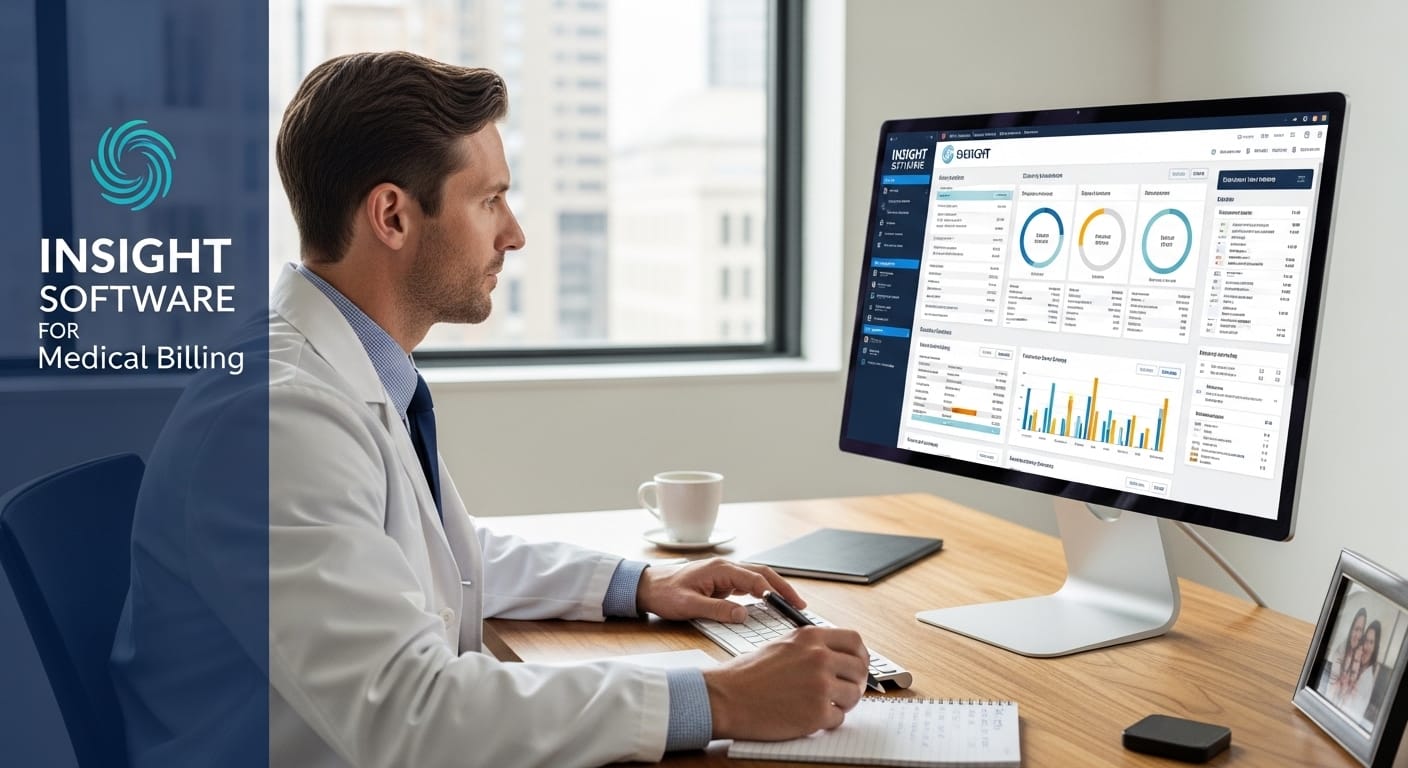
You can provide the best therapy in the world, but if the billing fails, the lights go out. This is why insight software integrates the clinical documentation directly with the billing engine. When you sign a note, the "charge capture" happens automatically based on the procedures you just documented. This prevents that awkward "did I charge for manual therapy today?" guessing game at 5:00 PM. It ensures that the codes on the bill perfectly match the story told in the note, which is the number one way to avoid those annoying insurance denials and audits that can sink a practice's cash flow.
Answering the big question: what is insight?
If you’re new to the platform, you might be wondering what is insight beyond just a place to put SOAP notes? In the context of rehab therapy, it’s a "Single System" approach that combines EMR, scheduling, billing, and reporting into one login. Usually, clinics have one program for the schedule, another for the notes, and a third for the billing. That’s a nightmare because none of them talk to each other. Insight is the bridge that connects all those islands, so a change in the schedule automatically updates the clinician’s task list, and a signed note automatically alerts the billing team to send out a claim.
Analyzing reach through facebook insights
Transitioning from the clinical side to marketing, many clinic owners use facebook insights to see if their local community is actually seeing their content. If you're posting about "How to treat lower back pain at home," you want to know if people are actually clicking through to your website. It’s the "data-driven" way to grow your patient base. By looking at the demographics and engagement rates, you can stop wasting time on posts that nobody cares about and double down on the topics that actually lead to new evaluations. Marketing is a science, and these numbers provide the lab results you need to experiment effectively.
Managing a global footprint with insight direct
For the bigger players in the tech procurement world, insight direct is often the go-to for sourcing the actual hardware like tablets and laptops that run the software. It’s about the supply chain. When you need to outfit fifty new therapists with iPads that are pre-configured with the right security settings, you need a partner that can handle that kind of volume. They take the headache out of hardware management, ensuring that every device is "enterprise-ready" the moment it’s taken out of the box. It’s the invisible backbone that allows the software to actually reach the hands of the clinicians.
Connecting with the insight global company
While some people get it mixed up with the software, the insight global company is a massive staffing and services firm that often helps fill the talent gap in the tech and healthcare sectors. If a clinic group needs a temporary project manager to oversee a massive software rollout, they might turn to a firm like this to find the right person. It’s all part of the larger ecosystem of professional services. Finding the right talent is just as hard as finding the right software, and having a reliable pipeline for skilled workers is crucial when you’re trying to scale a healthcare business in a competitive market.
The data-driven approach of insight health
The future of medicine isn't just about treating the patient in front of you; it’s about looking at populations, which is where insight health data analytics come in. By looking at the outcomes of thousands of patients with the same condition, clinics can start to see what’s actually working best. If the data shows that patients who get manual therapy in the first two weeks recover 20% faster, the clinic can change its standard of care. It’s about moving away from "I think this works" toward "I know this works because the data proves it." This is how we prove our value to payers in a "value-based care" world.
Partnering with an it service company for security

Even with great software, you still need a solid it service company to make sure your local network doesn't get hit by ransomware. They’re the ones who set up the firewalls, manage the Wi-Fi access points, and make sure your printers actually work when they’re supposed to. A lot of clinics think they can "DIY" their IT, but the moment a HIPAA auditor walks through the door, you’ll wish you had a professional team managing your encryption and access logs. It’s an investment in your own peace of mind and the safety of your patients' most private information.
Local tech support like better way electronics
Sometimes you don't need a global enterprise; you just need a local shop like better way electronics to fix a cracked screen on a clinic tablet. These local tech partners are essential for the "day-to-day" survival of a digital office. If a therapist drops their iPad on the gym floor, you can’t wait three weeks for a factory repair. Having a local place where you can get a screen swapped or a battery replaced in an afternoon keeps the workflow moving. It’s the small, local relationships that often keep a tech-heavy business from grinding to a halt over a simple hardware failure.
Centralizing patient support with Kuikwit.com
While the EMR handles the clinical side, you still have to deal with the constant stream of patient questions coming in from every direction, which is where Kuikwit.com saves the day. Patients don't just call anymore; they DM you on Instagram, message you on Facebook, or send a quick WhatsApp to ask about their copay. Kuikwit pulls all of those scattered messages into one dashboard so your front desk doesn't have to keep ten browser tabs open. You can assign a specific billing question to the office manager or set up AI auto-replies to handle basic stuff like "where do I park?" It makes your small clinic look like a high-end, responsive boutique because nobody ever feels ignored.
Comparing Software Solutions for Rehab
| Feature | Insight Go (Clinicient) | Standard Desktop EMR | Paper Records |
| Portability | High (Mobile/Browser) | Low (Stationary PC) | High (but bulky) |
| Documentation Speed | Fast (Real-time) | Delayed (Post-session) | Fast (but messy) |
| Compliance Alerts | Automated / Built-in | Manual Checks | Non-existent |
| Billing Integration | Instant / Automatic | Batch Uploads | Manual Entry |
| Patient Experience | High Engagement | Low (Back to patient) | Variable |
Making the Most of Your Digital Practice
It’s easy to feel overwhelmed by all the "Insight" brands and tech terms floating around, but the goal is always the same: spending more time with patients and less time with the computer. If you can use a tool like insight go to knock out 50% of your note during the actual treatment, you’ve already won half the battle.
The trick is to start small. Don't try to change every single clinic workflow in one day. Start with the documentation, get the hang of the mobile interface, and then move on to the more advanced analytics and reporting. Once the clinical team is happy, the rest of the business—the billing, the marketing, and the growth—usually follows quite naturally because everyone is less stressed.
Building a tech-forward clinic isn't about having the coolest gadgets; it’s about creating a "frictionless" environment. When your software, your IT support, and your customer communication (like Kuikwit) are all humming along, the "practice" of therapy actually feels like therapy again, rather than just a data entry job with some stretching on the side.
Frequently Asked Questions (People Also Ask)
What is the difference between Clinicient Insight and Insight Go?
Think of Insight as the "brain" and Insight Go as the "hands." Insight is the full, robust system that handles the heavy billing and admin tasks. Insight Go is the streamlined, mobile-friendly interface designed for clinicians to use on tablets and phones while they are actually treating patients.
Does Clinicient Insight Go work on Android and iPhone?
Yes, because it is a browser-based "web app," it doesn't matter what operating system you use. As long as you have a modern browser (like Safari or Chrome) and a Wi-Fi connection, you can log in and start charting without needing to visit an app store.
How much does Clinicient software cost for a small clinic?
Pricing is usually customized based on the number of providers you have and which features you need (like if you want them to handle your billing for you). It’s best to get a direct quote, but most clinics find that the time saved on documentation pays for the monthly fee.
Is Insight Go HIPAA compliant?
Absolutely. It uses the same high-level encryption as the main Clinicient platform. No patient data is actually stored "on" your phone or tablet; it’s all in the secure cloud, so if you lose your device, the data isn't compromised as long as you log out.
Can I use Insight Go for Speech Therapy (SLP)?
Yes, the system has specific templates and workflows built specifically for Physical Therapy (PT), Occupational Therapy (OT), and Speech-Language Pathology (SLP). It’s not a "one size fits all" medical note; it’s tailored to the rehab world.
How do I get a Clinicient login?
You’ll get your login credentials once your clinic administrator sets up your account in the system. If you're the owner, you'll go through an implementation process where their team helps you set up your database and trains your staff.
What is the "8-minute rule" feature in Insight?
It’s a built-in calculator that helps therapists in the US ensure they are billing the correct number of units for Medicare patients. It looks at the total time spent and the individual procedures to make sure you aren't over-billing or leaving money on the table.
Does Kuikwit integrate with Clinicient?
While they are separate tools, they work side-by-side to cover different parts of the business. Clinicient handles the clinical and billing data, while Kuikwit handles the "front-end" communication with patients across social media and chat apps to keep your schedule full.
So yeah, that’s a wrap on the world of Insight. It’s a lot to take in, but once you find that rhythm between the patient and the tablet, you’ll wonder how you ever survived with a pen and a clipboard...