How to Supercharge Your Marketing with Automation and Kuikwit

I used to spend my mornings answering the same five questions from customers. Every single day. "When will my order arrive?" "Do you have this in blue?" "What's your return policy?" "Are you open on weekends?" "Can I pay with Afterpay?"
Copy. Paste. Send. Copy. Paste. Send.
It wasn't the worst part of my job but it was close. And the real problem wasn't that it was boring. The problem was that while I sat there typing the same answers for the hundredth time, actual important work piled up. Strategy stuff. Growth stuff. The things that move a business forward.
So we automated it. Not everything. But the repetitive bits. And I want to be honest about what happened next — the good parts and the messy parts — because most blogs about marketing automation make it sound like you flip a switch and money falls from the sky. It doesn't work like that.
But it does work. Let me explain.
First Off — What Are We Even Talking About Here?
Marketing automation is a broad term and people throw it around loosely. So let me be specific about what I mean.
I'm talking about using software to handle tasks that you'd otherwise do manually, over and over, every day. Sending a welcome message when someone signs up. Firing off an order confirmation on WhatsApp. Reminding a customer about something they left in their cart. Following up a week after a purchase to ask how things went.
None of these tasks are complicated. Any person on your team could do them. But that's exactly the point — they shouldn't have to. Not when a tool can do it instantly, at 2am, on a Sunday, without getting tired or forgetting.
That's all marketing automation really is. Taking the stuff that eats your time and letting technology handle it so you can do the work that actually needs a human brain.
What Changed for Us After We Set This Up
I'll walk through what we noticed. Some of it was expected. Some of it genuinely surprised me.
Our response time went from hours to seconds. This was the most obvious change. Before automation, if someone messaged us outside business hours they'd wait until morning. Sometimes longer if the inbox was full. Now they get an instant reply. Not a lazy "we'll get back to you" message either. An actual answer to their actual question. The impact on customer satisfaction was immediate.
We stopped losing sales to slow replies. I didn't fully grasp how much this was costing us until we fixed it. People would message at 9pm asking about a product, and by the time we replied the next morning they'd already bought it somewhere else. Or they'd just lost interest. Happens fast. Once we had automated responses covering the common questions, those late-night browsers started converting. Wild how much revenue was just sitting there waiting for us to be faster.
My team got their mornings back. This mattered more than I expected. When you free people from answering "what are your shipping times" forty times a day, they start doing creative work again. Better campaigns. Better content. Better ideas. The energy in our team shifted once the tedious stuff was off their plates.
Our messaging got weirdly more consistent. Before automation, the quality of a customer's experience depended on who answered their message. Some team members were great. Some were having a bad day. Automation doesn't have bad days. Every customer gets the same friendly, helpful reply. And yeah, that consistency matters more than I thought it would.
Following up stopped falling through the cracks. We always intended to follow up after purchases. Check in with customers, ask for feedback, suggest related products. But honestly? We forgot half the time. We got busy. It slipped. Automating those follow-ups meant they actually happened. Every time. And customers noticed. We started getting replies like "thanks for checking in, that's really thoughtful." They had no idea it was automated. It just felt like good service.
The Stuff Nobody Tells You
Not everything was smooth. I want to be real about that.
Our first chatbot script was terrible. Like, embarrassingly bad. It sounded like a corporate FAQ page gained consciousness. Customers could tell immediately they were talking to a bot, and not a good one. We rewrote the whole thing in a more casual tone — shorter sentences, contractions, even a bit of humour — and the difference was massive. Lesson learned: spend time on your bot's voice. It represents your brand.
We also made the mistake of automating too much at first. There were conversations that needed a human and we'd left the bot to handle them. A customer with a genuine complaint doesn't want to talk to a chatbot. They want empathy and a real solution. We had to build in better handoff triggers so the bot knew when to step aside and bring in a person.
And the analytics confused us initially. Lots of data, not enough clarity on what to do with it. Took us a few weeks to figure out which numbers actually mattered. Response time, conversion from chat to purchase, repeat customer rate — those turned out to be our key metrics. Everything else was noise.
Practical Steps If You Want to Try This
Forget the big fancy rollout. Start small. Seriously.
Pick your biggest time-waster and automate that first. For us it was answering FAQs. For you it might be sending order updates. Or appointment reminders. Or abandoned cart nudges. Whatever eats the most hours from your week — that's your starting point.
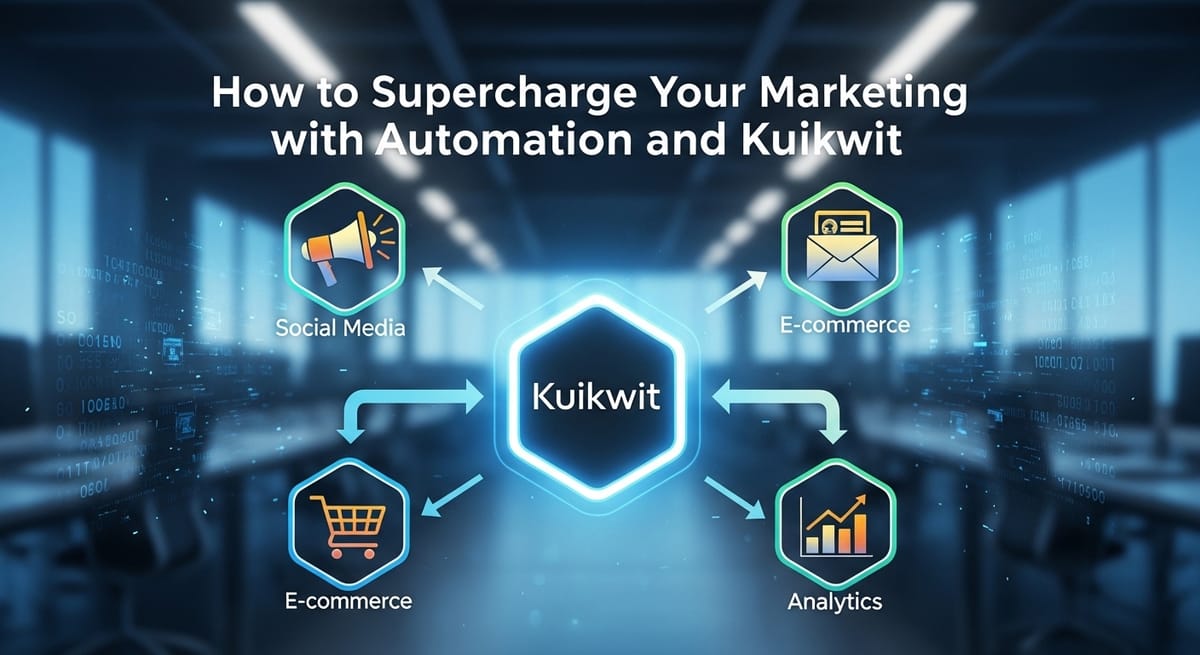
Choose a tool that covers the channels you actually use. No point getting a platform that's amazing at email if all your customers message you on WhatsApp. We went with Kuikwit because it handles WhatsApp, Instagram, SMS, web chat, and Messenger all in one dashboard. That was the main selling point for us. One inbox instead of five.
Write your automated messages like a normal person would talk. Read them out loud. If they sound like a press release or a terms-and-conditions page, rewrite them. People can smell corporate-speak a mile away and they hate it. Be warm. Be brief. Be helpful.
Set up after-hours responses on day one. Your customers don't stop having questions at 5pm. Even a simple "Hey, we got your message — someone will get back to you first thing tomorrow morning" is better than silence. Way better.
Check your chat transcripts every week. I cannot stress this enough. Reading actual conversations between your bot and your customers will teach you more about your business than any analytics dashboard. You'll see exactly where people get confused, what questions your bot can't answer, and where you're losing people. Fix those gaps and your automation gets smarter over time.
Why We Stuck With Kuikwit
I've tried a few platforms. Some were too complicated. One had a gorgeous interface but the chatbot builder was painful to use. Another was cheap but couldn't handle WhatsApp properly, which made it useless for our audience.
Kuikwit hit the sweet spot for us. Everything in one place — that was the non-negotiable. WhatsApp, Messenger, Instagram, live chat on our website, SMS. All flowing into one inbox. My team didn't have to switch between apps anymore. That alone saved us probably an hour a day.
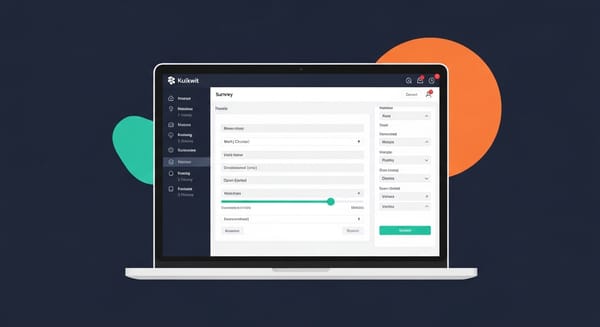
The chatbot builder was straightforward. No coding, no complicated flow charts that need an engineering degree. We built our first bot in an afternoon and had it live by the evening. Tweaked it over the following weeks based on what we saw in the transcripts.
The AI features are solid too. Product recommendations, smart replies, routing complex queries to the right team member. Nothing revolutionary on its own but together it creates a pretty seamless experience for customers.
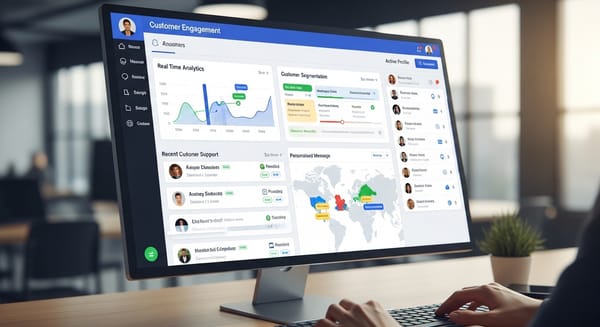
And the reporting actually makes sense. Clean dashboards. Clear metrics. No wading through pages of data to find the one number you care about.
My Honest Take on Marketing Automation
It's not magic. I want to be clear about that. You still need good products, good service, and good people. Automation doesn't fix a broken business. What it does is remove the friction. It takes the stuff that slows you down, the stuff that's repetitive and draining, and handles it quietly in the background.
The result? Your team does better work. Your customers get faster service. Your business scales without everything falling apart.
We should've done it two years earlier than we did. If you've been putting it off, stop. Pick one thing to automate this week. Just one. See how it feels.
I think you'll be surprised.
Questions People Usually Ask
Marketing automation — is it just for big companies? Not even close. Small businesses arguably benefit more because they have smaller teams doing more work. Automation gives you capacity you didn't have before without hiring anyone new.
Won't my customers know they're talking to a bot? If the bot is badly written, yes. If you put thought into the script and keep it conversational, most people won't notice or won't care — as long as they get a helpful answer quickly.
What should I automate first? Whatever you spend the most time on that doesn't require creative thinking. FAQs, order updates, appointment reminders, follow-up messages after a purchase. Start there.
How much does this cost? Varies a lot depending on the tool. Kuikwit is pretty reasonable for what you get. The ROI usually shows up fast because you're saving time and catching sales you were previously missing.
What if automation messes up a customer interaction? It happens. That's why you need an easy handoff to a human. Build that into your setup from the start and monitor your transcripts regularly. Problems are fixable as long as you catch them early.