How KuikWit Improves Your Sales Process and Lead Flow
KuikWit helps businesses improve the sales process by centralizing conversations, reducing missed leads, and making follow-up easier for growing teams.

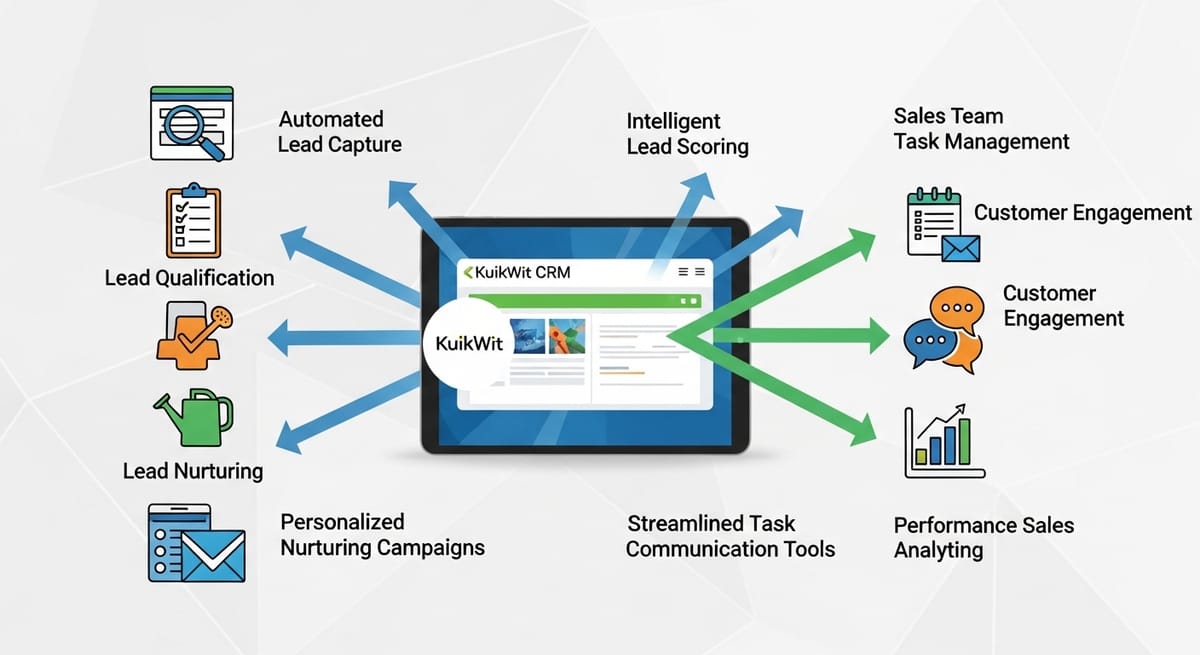
A sales process is the path a business follows to turn interest into revenue. It covers how leads come in, how they are qualified, how conversations move forward, and what finally helps a buyer say yes. When this flow is clear, teams waste less time, miss fewer opportunities, and close with more confidence
What is a sales process?
It is the set of steps a business uses to move someone from first contact to purchase, and sometimes beyond the sale into retention.
Is it worth improving?
Yes. A messy process leaks leads, creates slow follow-ups, and makes forecasting unreliable. A clear one does the opposite.
How does it work?
It usually starts with lead capture, then qualification, outreach, discovery, follow-up, handling objections, closing, and post-sale care.
The Real Meaning of a Sales Cycle
A sales cycle is not just a neat chart inside a CRM. In real life, it is a series of small moments. A prospect clicks an ad. Someone replies to a WhatsApp message two days later. A team member forgets to follow up. Another one sends the quote too early. That is the cycle, too. It is messy when businesses do not define it. And when they finally do, performance starts to look less random. Some sales cycles are short and transactional. Others drag on for weeks, especially in service businesses or B2B deals where more than one person is involved. The important part is not making it look pretty. It is making it repeatable. That way, your team knows what to do next instead of guessing every single time.
How the Sales Process Works in Practice
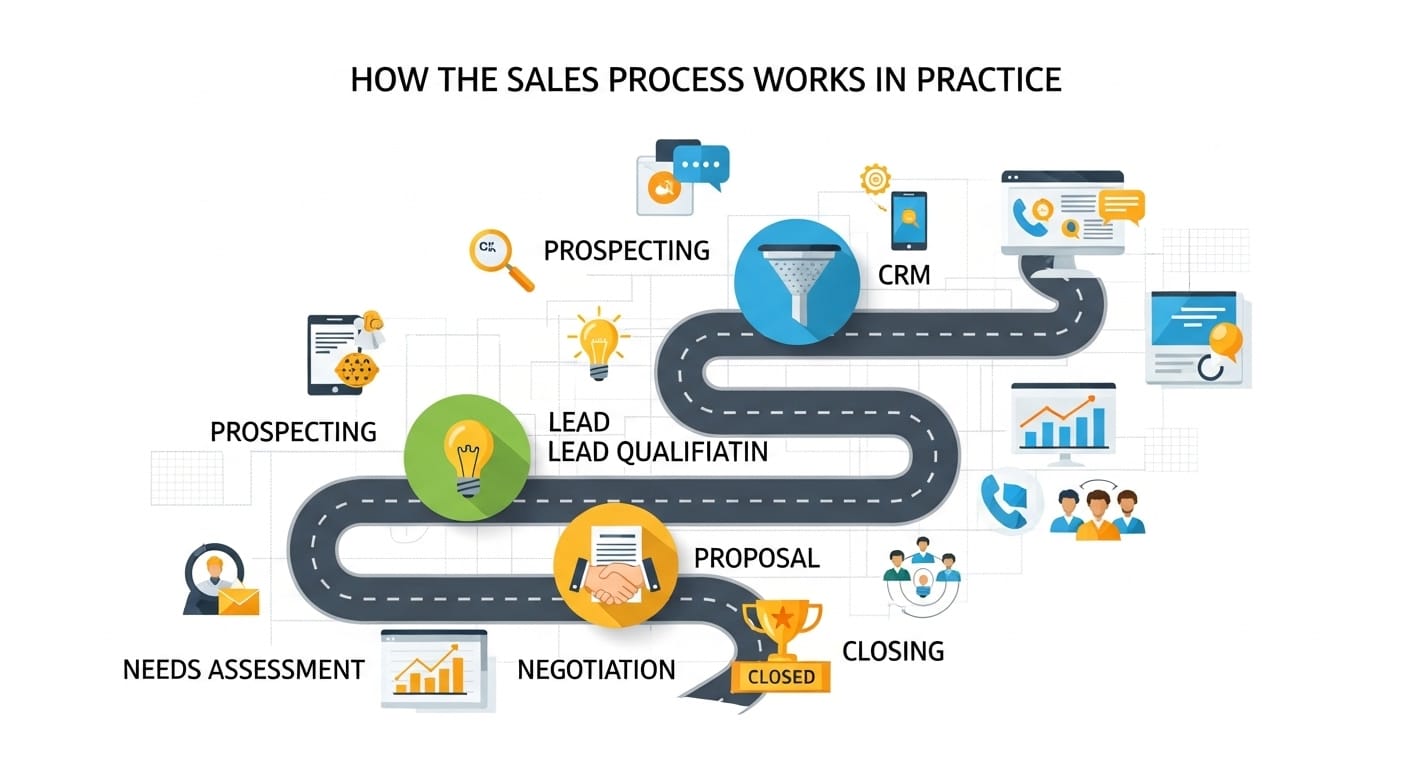
A lot of companies think selling starts when a rep calls a lead. Not really. It starts much earlier, often when a person sends a message, fills a form, replies to a story, or asks a simple question like “How much is this?” That first touch matters more than people admit. Then comes qualification. Not every lead is a fit, and chasing all of them burns time. After that, the process moves into discovery, where the team tries to understand the buyer’s actual problem, budget, urgency, and decision path. Then comes the offer. Then objections. Then the follow-up that people forget. Then maybe the close. Or silence. Or a delayed reply three weeks later. The point is that selling is not one conversation. It is a chain of actions, and every weak link shows up later in lost revenue.
Sales Procedure That Keeps Teams Consistent
A sales procedure is the operating layer behind the bigger strategy. It answers simple but important questions. Who responds first? How fast should the team reply? What counts as a qualified lead? When should a quote be sent? When does a manager step in? Without those rules, sales depends too much on individual memory and mood. One rep follows up well, another disappears, and the owner ends up fixing the gaps. A proper procedure brings consistency without making conversations robotic. It should be flexible enough for real buyers, but clear enough that no one has to reinvent the method every morning. This is where many growing teams stumble. They hire more people before they define the procedure. Then they wonder why growth feels noisy, expensive, and hard to control.
Why Businesses Lose Leads Without Noticing
Lost leads do not always disappear in dramatic ways. Most of the time, they fade out quietly. A message gets buried in Instagram. An email sits unread. A sales rep thinks someone else replied. A WhatsApp inquiry never gets logged anywhere. This is where modern customer communication tools matter. Kuikwit is an all-in-one customer communication and Smart CRM platform designed to unify various messaging channels into a single, manageable dashboard. Instead of switching between apps and missing conversations, teams can respond from one place. That matters more than it sounds. Because “notification hell” is not just annoying. It is expensive. When lead handling is scattered across channels, the sales flow breaks before it even begins. Businesses trying to improve visibility across conversations should look at KuikWit 2026 features to see how modern communication tools can support a stronger selling system.
B2B Sales Process Needs More Than Fast Replies
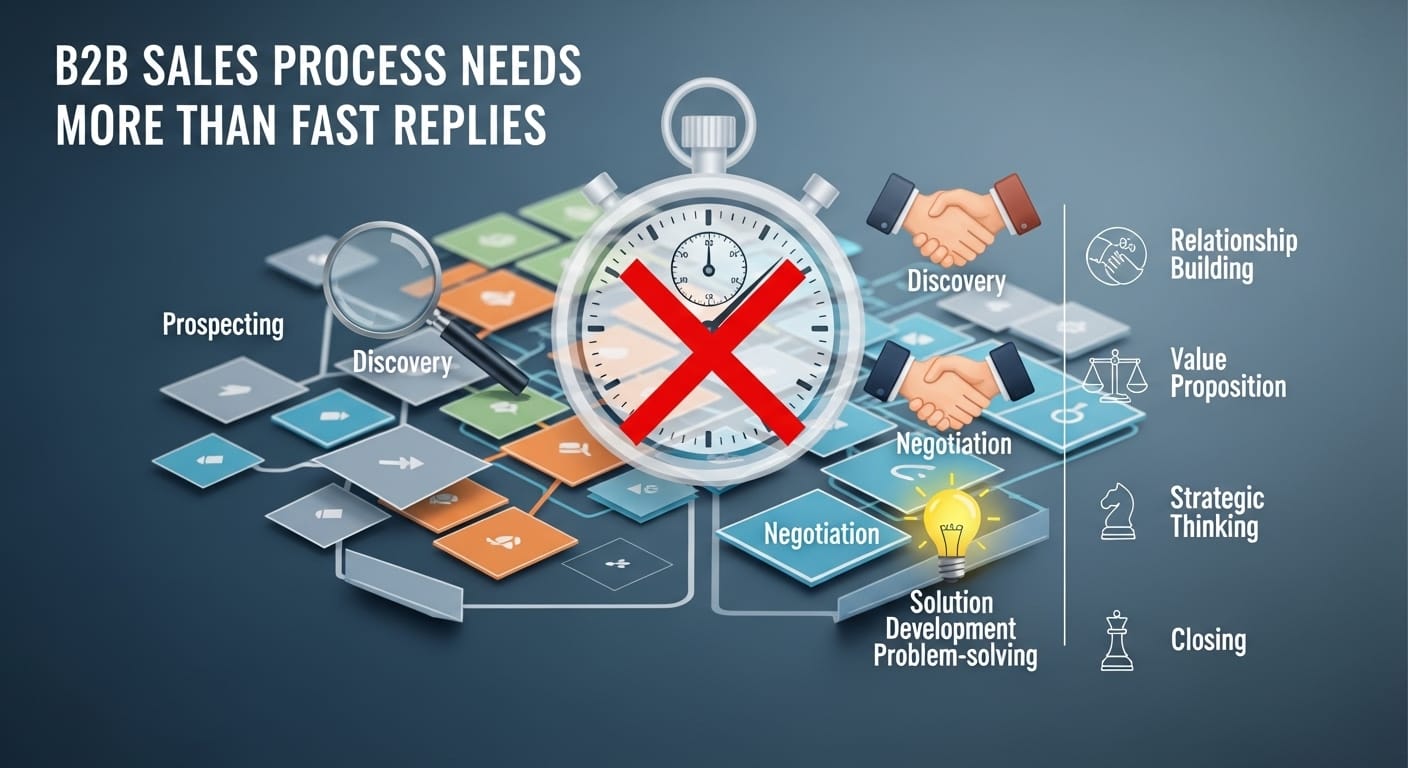
The b2b sales process usually takes longer because buyers want proof, clarity, timing, and internal alignment. One person may love the product, but the finance manager blocks it. Or the founder wants it, but operations has concerns. This means your team needs more than speed. It needs context. Discovery has to go deeper. Questions should cover business pain, current systems, expected return, timeline, and who actually signs off. In B2B, trust builds through relevance. Generic follow-ups rarely move the deal. Useful follow-ups do. A shared dashboard, clear contact history, and structured notes make a difference here because handoffs become cleaner. A business cannot scale B2B outreach if every conversation lives inside one employee’s private inbox or chat app. That model breaks the moment the volume picks up.
B2B Sales Techniques That Actually Move Deals Forward
A lot of b2b sales techniques sound clever in theory and feel awkward in real conversations. Buyers can tell when they are being pushed through a script. The stronger approach is simpler. Ask sharper questions. Listen longer than you think you need to. Reflect the real cost of the problem back to the buyer. Show specific outcomes, not broad promises. Then make the next step easy. That is what works. The best reps also know when to slow down. Rushing a decision too early can create resistance. Good selling often looks calm from the outside. There is less pressure, more clarity. And when teams track previous conversations properly, they stop repeating themselves. That alone improves trust. Buyers do not want to explain their situation from zero every time a new rep joins the thread.
Sales Management Process and Team Visibility
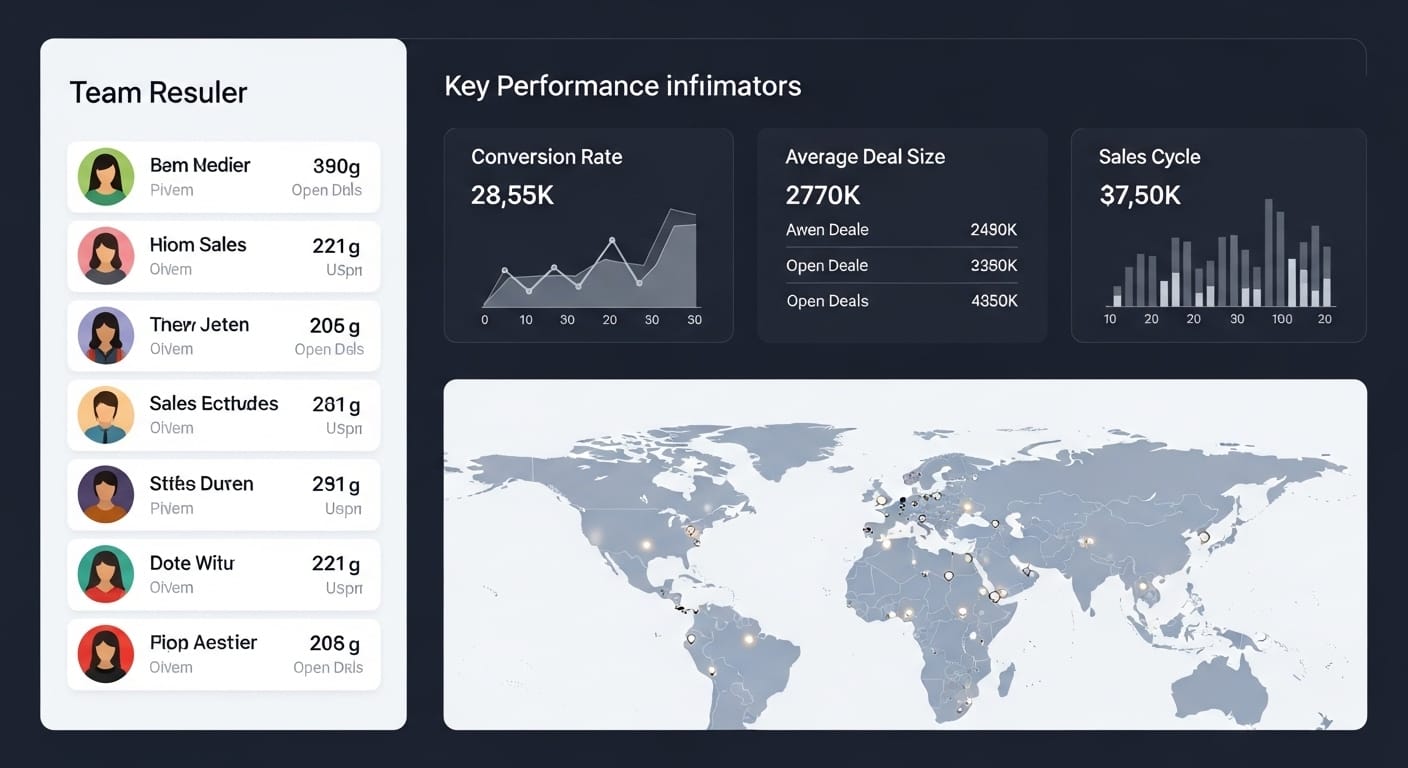
The sales management process is what helps leaders see whether the team is working the pipeline or simply appearing busy. Calls made do not always mean progress. Neither do fancy dashboards with no real data behind them. Managers need visibility into lead sources, response times, stage movement, close rates, and drop-off points. But they also need context. Why is a deal stuck? What objection keeps coming up? Which channel brings serious buyers and which one brings casual browsers? This is where process and software meet. If updates are inconsistent, management decisions become guesswork. If the team records interactions well, patterns show up fast. You can see whether a problem is pricing, messaging, weak qualification, or just slow follow-up. If you are comparing tools at this stage, it helps to first understand how to choose the right CRM for boosting sales before redesigning your workflow.
Sales Process Optimization Starts With Friction
Sales process optimization does not begin with flashy automation. It starts with friction. Where are buyers waiting too long? Where does your team repeat work? Where do conversations get lost? Where do quotes stall? Once those points are visible, improvement becomes practical. Maybe the issue is delayed replies outside office hours. Maybe reps are spending too much time on low-fit leads. Maybe nobody knows which message came in first because conversations are split across channels. Optimization is often less about doing more and more about removing nonsense. Clean handoffs. Faster visibility. Better qualification. Stronger follow-up timing. This is one reason platforms like Kuikwit fit naturally into modern sales operations. Teams that want better follow-up, less confusion, and faster response times can learn how to empower your sales team with KuikWit through a more unified setup.
Sales Process Automation Without Losing the Human Side
Sales process automation gets misunderstood all the time. Some people think it means robotic messages and canned follow-ups. That is the bad version. The good version handles the repetitive parts so humans can focus on better conversations. Automatic lead capture, reminder triggers, conversation assignment, stage updates, and follow-up scheduling can save hours every week. More importantly, they reduce the chance that a warm lead goes cold because someone forgot to respond. But automation should not take over the whole experience. Buyers still want relevance. They want to feel heard, not processed. The best systems support human judgment instead of replacing it. That balance matters. Especially for service businesses, consultative sales, and B2B teams where trust usually closes the deal, not a workflow alone.
A Simple Table for Mapping the Funnel
Here is a practical way to think about the journey and where businesses often get stuck:
| Stage | What Happens | Common Problem | Better Move |
|---|---|---|---|
| Lead Capture | Inquiry comes in from website, chat, ad, or social | Message gets missed or delayed | Centralize channels in one dashboard |
| Qualification | Team checks fit, budget, urgency, and intent | Everyone gets treated the same | Use clear qualification rules |
| Discovery | Team understands the buyer’s problem | Reps ask shallow questions | Focus on pain, timing, and decision-makers |
| Offer | Proposal, quote, or demo is shared | Offer sent too early or too vaguely | Match offer to the buyer’s actual need |
| Follow-Up | Team checks in and handles objections | Inconsistent timing | Use reminders and tracked follow-ups |
| Close | Buyer commits, pays, or signs | Last-minute confusion | Keep next steps clear and simple |
| Post-Sale | Onboarding, support, upsell, retention | Customer goes quiet after purchase | Maintain communication and ownership |
Common Mistakes That Make Selling Harder
One of the biggest mistakes is treating all leads like they have equal intent. They do not. Some are curious. Some are ready. Some are comparing five providers at once. When teams ignore that, they waste energy in the wrong places. Another mistake is relying on memory instead of systems. Reps promise themselves they will remember to follow up. Then meetings happen, messages pile up, and the lead cools off. Another one, maybe the most common, is poor channel management. Businesses generate leads from Facebook, Instagram, WhatsApp, website forms, and email, then handle all of it in separate places. That setup almost invites missed opportunities. Some teams also send proposals too quickly, before they understand what the buyer really needs. That creates weak offers and slow decisions. Then they blame pricing.
Sales Cycle vs Customer Support: Why They Overlap
A lot of business owners separate sales and support too aggressively. In reality, buyers often move between the two. Someone asks a pre-sale question that sounds like support. Another person comes back after purchase with a problem that affects retention and future upsells. These moments should not live in different silos with no shared history. A connected communication setup helps because the business sees the whole customer story, not just isolated touchpoints. This is one of the reasons customer communication platforms are becoming central to revenue teams, not just support teams. When sales knows what support is hearing, objections become clearer. When support knows how the customer was originally sold, expectations become easier to manage. Sales does not stop after the close, and strong help desk services often play a big role in retention, customer trust, and repeat business. That continuity matters. It reduces confusion and makes the experience feel more joined up.
Why Used Process Equipment for Sale Shows Intent Complexity
The phrase “used process equipment for sale” may seem like a separate topic, but it shows something important about search intent. Buyers looking for industrial or specialized products usually have a more layered decision path. They are not just browsing. They want technical fit, condition details, vendor trust, pricing transparency, and maybe compliance information too. That means the path to purchase cannot be shallow. Teams in that kind of market need a more detailed qualification and follow-up approach. They also need better documentation inside the CRM. Specialized buyers ask specific questions, and weak records make the team look unprepared. This is true beyond industrial equipment. Any business selling higher-consideration products or services should expect a longer journey and build for that reality instead of hoping quick chats will do the job.
Comparison: Manual Selling vs Unified CRM-Led Selling
Manual selling can work for a while. Especially when the founder is involved and lead volume is still manageable. But it becomes fragile fast. One missed message can cost a serious deal. One staff absence can interrupt the whole flow. In a unified CRM-led model, conversations are visible, assignable, trackable, and easier to continue. That does not guarantee better sales overnight, but it removes a lot of avoidable failure. Kuikwit fits into this model by helping teams manage customer conversations from one dashboard instead of hopping across apps. For businesses that depend on quick first contact, KuikWit live chat can help capture and respond to leads before they lose interest. That is not a small convenience feature. It changes response speed, accountability, and lead continuity. And once the communication layer is cleaner, everything else becomes easier to improve. Qualification gets sharper. Follow-up gets steadier. Managers get clearer data. The whole engine runs with less strain.
What Better Sales Feels Like for the Team
When the process is working, the team feels less frantic. Reps do not waste time searching for old chats or asking who replied last. Managers do not chase updates in five places. Owners stop feeling like every deal depends on personal intervention. Better selling feels quieter, in a good way. There is less confusion. Fewer dropped threads. More confidence in what stage a lead is actually in. That kind of control matters whether you are selling software, services, retail offers, or complex B2B solutions. The structure does not need to be complicated. It just needs to be real. Useful. Followed by the team. And adjusted when friction shows up.
FAQs
What are the 7 steps in a typical sales process?
Most teams use a version of lead generation, qualification, discovery, presentation or proposal, objection handling, closing, and post-sale follow-up. The exact labels vary, but the flow is usually close to that.
What is the difference between a sales cycle and a sales process?
A sales cycle describes the full buyer journey over time. A sales process is the internal method the business uses to move that journey forward. One is observed. The other is designed.
Why is a CRM important for sales teams?
A CRM helps teams track conversations, manage stages, keep records, and follow up consistently. It reduces guesswork and makes sales activity more visible across the business.
How can small businesses improve follow-up without hiring more staff?
They can centralize communication, define response rules, use reminders, and automate repetitive tasks like lead assignment or status updates. Often the issue is workflow, not headcount.
What is sales process automation?
It means using software to handle repetitive parts of selling, such as routing leads, sending reminders, logging interactions, or triggering follow-ups, while keeping human conversations where they matter.
That is really what most businesses need in the end. Not a dramatic reinvention. Just a cleaner path from first message to closed deal. Fewer loose ends. Better timing. Less chaos. And a system the team can actually live with.