Why KuikWit Data Hygiene Matters More for Modern Sales Teams
KuikWit data hygiene helps businesses clean, organize, and maintain accurate data to improve CRM performance, reduce errors, and support better sales, service, and decision-making across growing teams.

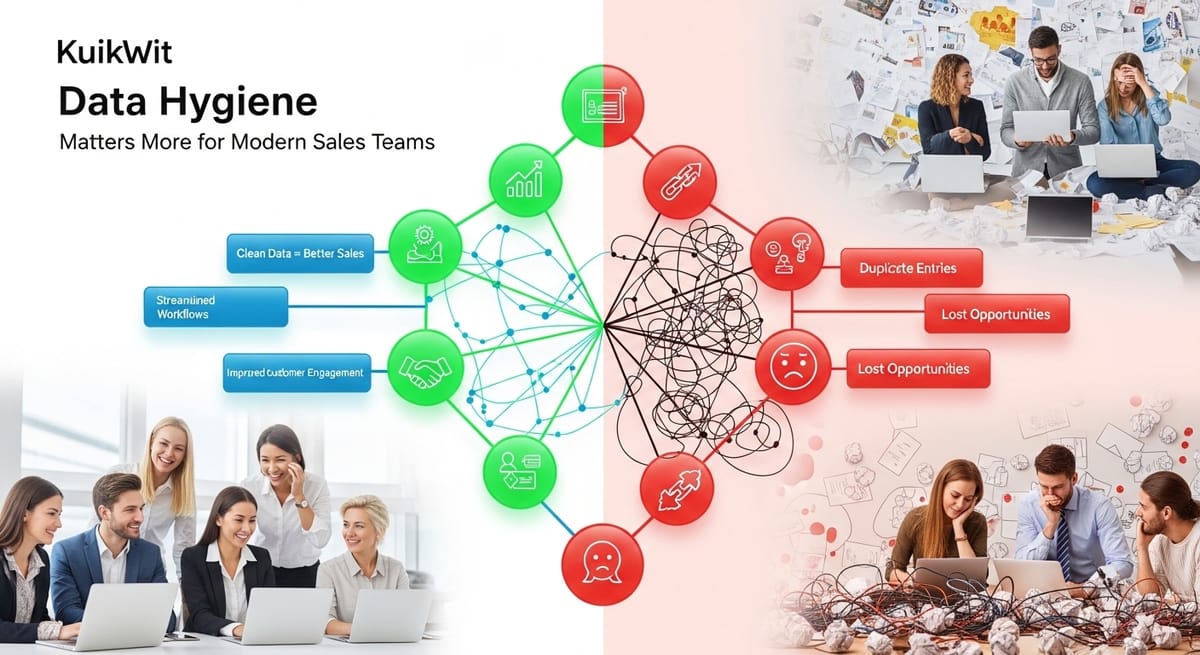
Your customer database is probably a mess. Don't worry, most companies are in the same boat. Data hygiene isn't something people talk about at dinner parties, but it's literally one of the most important things you should be thinking about if you run a business. Let me explain what it actually means and why it matters so much.
Understanding What Is Data Hygiene
So first things first. What is data hygiene anyway? It's basically the practice of keeping your data clean, organized, and accurate. That's it. Nothing complicated. Your customer records, contact information, transaction history—all of it needs to be in good shape. When your data is messy, duplicated, outdated, or just plain wrong, your business suffers.
Think about it. You've got customer records with typos in email addresses. Phone numbers that are missing a digit. Addresses from five years ago. Customer names spelled three different ways in your system. That's bad data. That's the opposite of what you want. When your data is like this, your marketing campaigns fail. Your sales team wastes time chasing leads that aren't real. Your customer service gets confused about who they're talking to. Everything falls apart.
Data hygiene is the solution. It's the process of cleaning all that up, getting rid of duplicates, fixing errors, and making sure everything is current and accurate. It's boring work. Nobody gets excited about it. But it's absolutely essential. Your entire business runs on data. If that data is garbage, your business runs on garbage.
Data Hygiene Best Practices That Actually Work
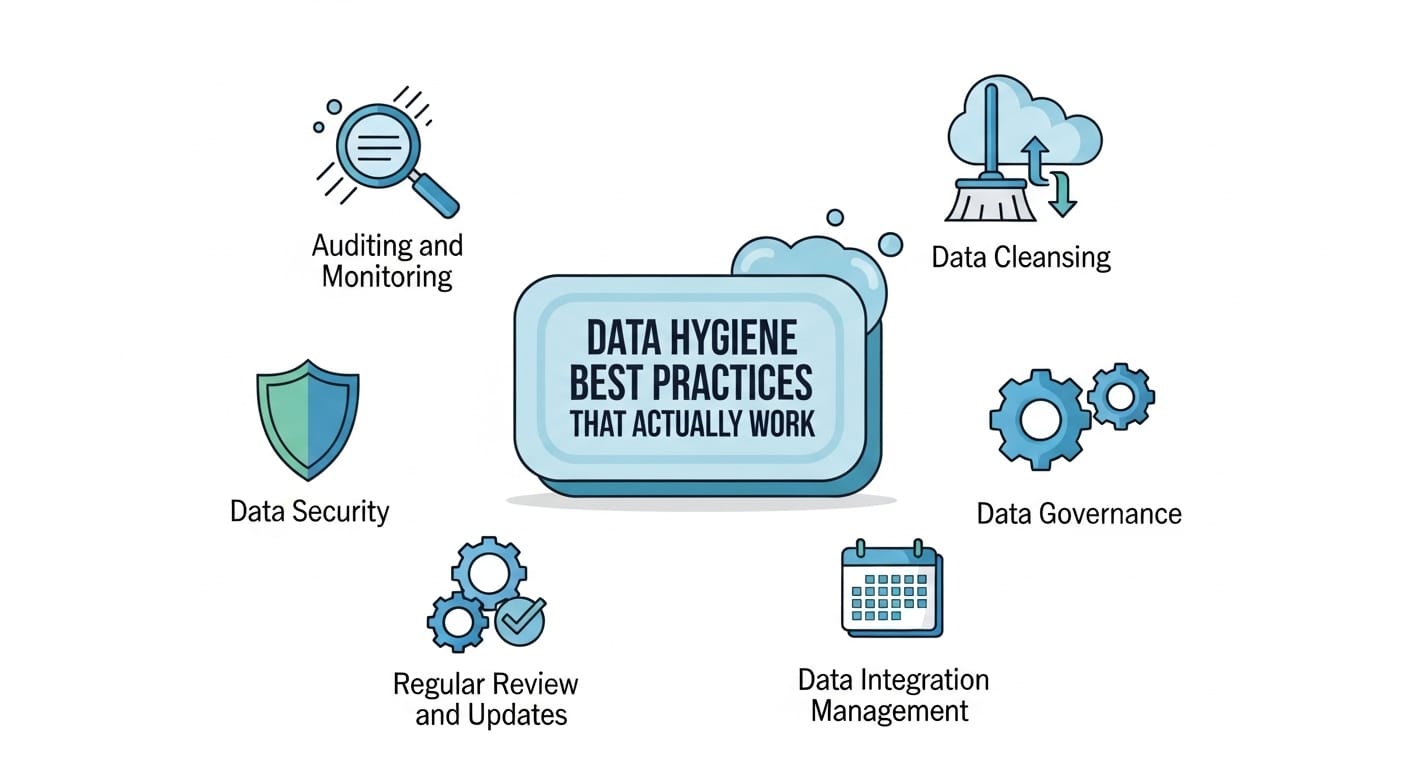
Okay so let's talk about how to actually do this. Data hygiene best practices aren't rocket science. You don't need some complicated system. You just need to be consistent and careful about how you handle information.
First thing. Establish rules for how data gets entered into your system. Make it clear what format phone numbers should be in. Where the area code goes. Whether you use hyphens or not. Do you capitalize names? Do you include middle initials? These might seem like tiny details but when everyone follows the same rules, your data stays consistent. Second thing is regular audits. Go through your database every quarter or so. Look for duplicates. Spot typos. Check if contact information is still current. You don't need to do this monthly. Quarterly is usually enough unless you've got massive customer volume.
Third thing is removing old data. If someone hasn't done business with you in three years, maybe it's time to delete their record. Or at least archive it somewhere. Dead data just takes up space and makes your database harder to manage. Fourth thing is standardizing everything. Make sure all your dates are formatted the same way. All your phone numbers follow the same pattern. All your addresses use consistent abbreviations. This sounds tedious but it saves you hours of headaches later.
Fifth thing is validation. When data comes in, validate it. Make sure it's accurate before it enters your system. If you're getting contact information from a form on your website, validate the email address format. Make sure the phone number has the right number of digits. Catching problems early is way easier than fixing them after they've been in your system for months. Sixth thing is documenting everything. Keep records of what you're doing. When did you last clean the database? What problems did you find? What did you fix? This documentation helps you track progress and identify patterns.
CRM Data Hygiene: Your Customer Relationship Manager Depends On It
Now let's talk specifically about CRM data hygiene. Your CRM system is basically the heart of your business operations. Sales, marketing, customer service—everybody's pulling information from there. If your CRM data is dirty, then all those departments are making decisions based on bad information.
CRM data hygiene means making sure every record in your customer relationship management system is accurate and up to date. You've got contact records that need to be right. You've got deal information that needs to be current. You've got interaction history that needs to be complete. All of this lives in your CRM and all of it needs to be clean. When your sales team is looking at a prospect, they need to know if that person is actually interested or if the last interaction was two years ago and the deal died. When your marketing team is running a campaign, they need current email addresses that actually work. When your customer service team is handling support requests, they need accurate account information.
Most companies have major problems with their CRM data. Maybe you're missing email addresses for half your contacts. Maybe your phone numbers are incomplete. Maybe you've got the same customer entered three times with slightly different names. Maybe your deal information hasn't been updated in months and sales reps are working outdated numbers. These problems pile up fast. Your team gets frustrated because the system isn't reliable. Your conversion rates drop because you're not reaching the right people. Your customer satisfaction suffers because you don't have accurate information.
The fix is establishing regular CRM data hygiene procedures. Audit your database. Find duplicates and merge them. Update contact information. Remove records for companies that don't exist anymore. Make sure every deal has current information. Set up rules for how new data gets entered. Train your team on proper data entry. Make it part of your regular workflow, not something you do once a year. For a broader look at choosing a system that supports cleaner customer records, read how to choose the right CRM for boosting sales.
Data Hygiene Software: Do You Actually Need It?
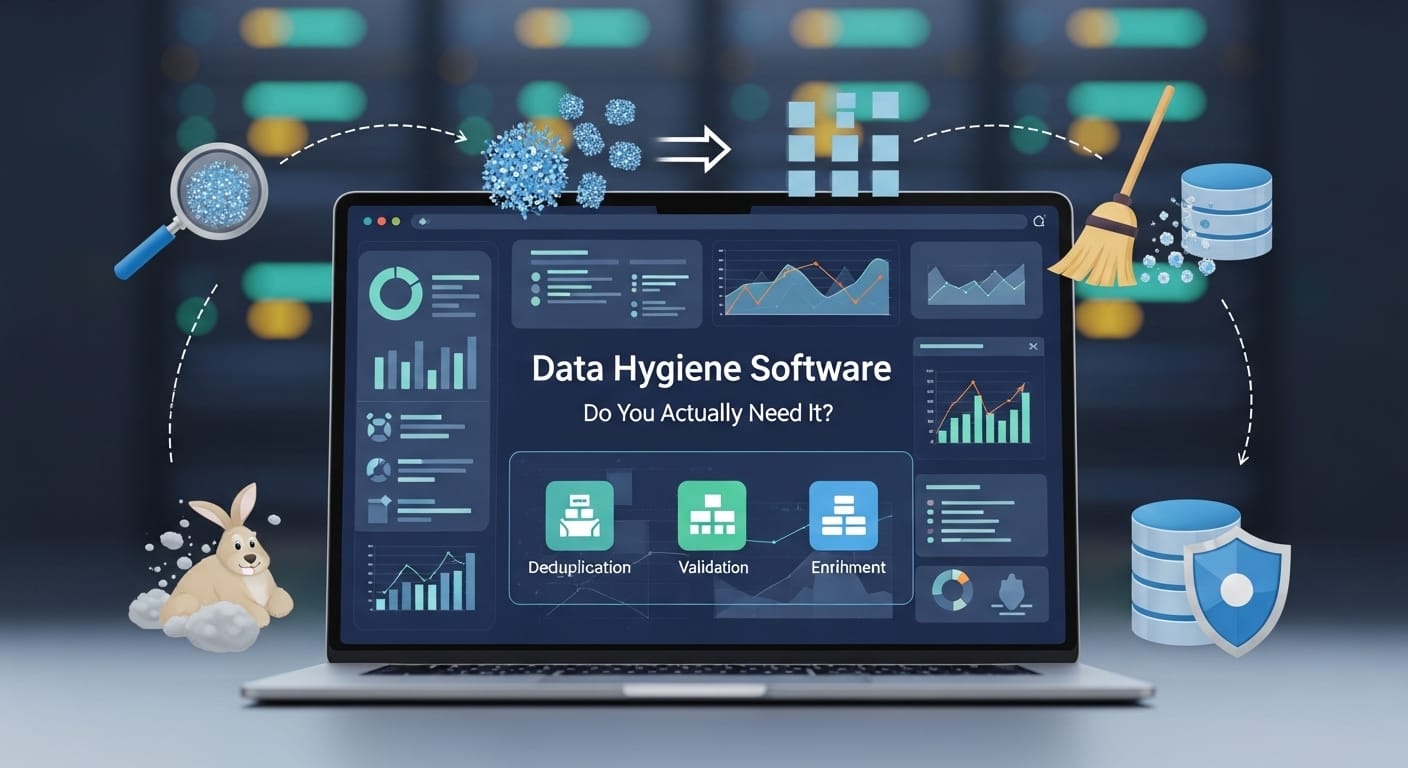
Here's a question people ask me a lot. Do I need to buy data hygiene software to fix my data problems? The answer is: probably not, at least not to start. You can clean a lot of data manually if your database isn't huge. But once you get to a certain scale, software becomes really helpful.
Data hygiene software basically automates a lot of the work. It can scan your database, find duplicates, and flag them for you to review. It can validate addresses and phone numbers against known databases. It can identify records that are outdated. It can catch inconsistencies in formatting. Some tools can even fix certain problems automatically, like standardizing phone number formatting or cleaning up address data.
The question is whether the cost is worth it. If you're a small business with a few hundred customer records, probably not. You can handle it manually. But if you've got thousands of records, or if data is central to your business operations, then investing in data hygiene software makes sense. You save time. You reduce errors. You improve data quality faster than you could do it manually. If you want to see how platform capabilities can influence cleanup workflows, explore KuikWit 2026 features nobody talks about.
What kind of data hygiene software is out there? There's generic database cleaning tools. There's specialized CRM data cleaning solutions. There's address verification services. There's duplicate detection tools. The right choice depends on what problems you're trying to solve. If you just need to find duplicates, one tool might be perfect. If you need to validate addresses and clean phone numbers and standardize formatting, you might need a different tool. Research what you actually need before buying something.
Salesforce Data Hygiene: Keeping Your Largest Database Clean
Salesforce data hygiene is a specific thing because Salesforce is where a lot of companies keep their most critical data. Your entire sales pipeline lives in Salesforce. Your customer records live there. Your deal information. Your interaction history. Everything important. If that data is messy, your whole business feels the impact.
The problem is that Salesforce data gets dirty really easily. Sales reps enter information quickly and make typos. They duplicate records by accident. They don't follow standard formatting. They enter data in the wrong fields. Over time you end up with a Salesforce database that's unreliable. Reports are wrong because the underlying data is wrong. Forecasting is inaccurate. The sales team wastes time cleaning up data instead of selling.
Fixing Salesforce data hygiene requires a specific approach. You need to establish data entry standards within Salesforce. You need mandatory fields so certain information always gets captured. You need validation rules that prevent bad data from being entered. You need regular audits to find problems. You might need duplicate detection tools built for Salesforce. You might need to set up automated processes that clean data on a schedule.
The investment is worth it though. Clean Salesforce data means accurate forecasting. It means your reports actually tell you what's happening with your business. It means your sales team can trust the information they're looking at. It means your customer success team has accurate account information. Clean data in Salesforce essentially means your entire revenue operation is working with good information instead of garbage.
Data Hygiene Services: When To Hire The Experts
You might be thinking at this point, "Can I just hire someone to fix this for me?" Yes. Data hygiene services exist for exactly that reason. If you don't have the time or expertise to clean your data, you can hire a service to do it.
What do data hygiene services actually do? They come in, analyze your database, identify problems, and fix them. They remove duplicates. They fix formatting issues. They validate and correct contact information. They archive old data. They set up processes to prevent the problems from happening again. Some services specialize in particular platforms like Salesforce or HubSpot. Others are more general purpose database cleaning services. And if your support team relies on customer records every day, this guide on help desk services.
The question is cost versus benefit. Hiring a service costs money. A lot of money if you have a huge database. But consider the alternative. You spend your own team's time on this work. Your team isn't selling or supporting customers. They're cleaning data. That's expensive in a different way. Plus, professional services often do a better job. They find problems your team would miss. They set up better processes.
When should you hire a service? If your database is huge and really dirty, it might be worth it to have professionals do a one-time deep cleaning. If you don't have in-house expertise, it might be worth it. If your data quality is actively hurting your business, it's probably worth it. But if you're a small company or your data problems aren't severe, you can probably handle it yourself.
Data Quality and Business Impact: Why This Actually Matters
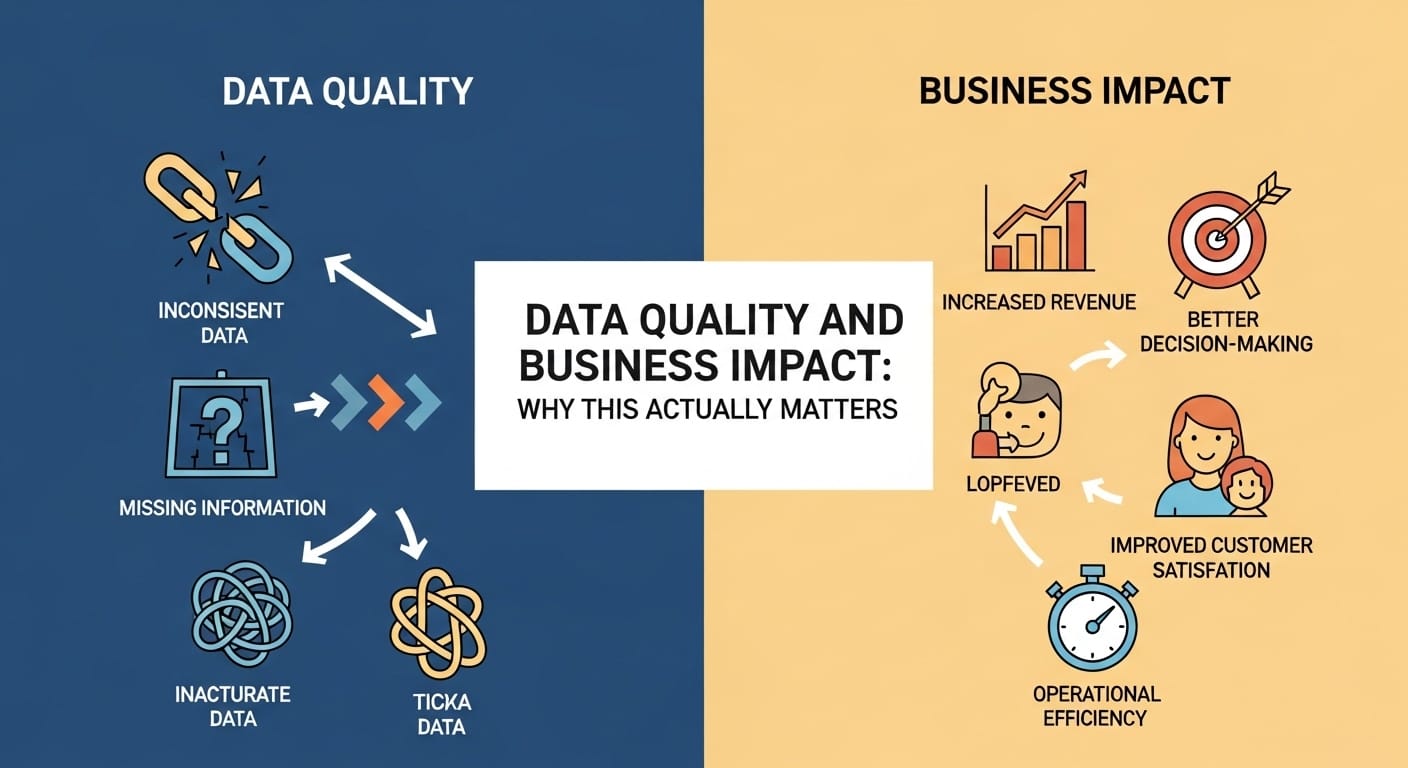
Let's talk about why data hygiene is more than just a nice-to-have. It's essential to your business operations. Bad data has real costs. Let me give you some examples.
Your marketing team is running a campaign to reach out to companies in a specific industry. But your data is dirty. Twenty percent of your industry codes are wrong. So your campaign goes to the wrong people. Your conversion rate is half of what it should be. That's real money lost. Your sales team is working from an outdated pipeline. They think they've got fifty active prospects but half of them haven't responded in a year. They spend time chasing dead deals instead of pursuing real opportunities. That's lost revenue. Your customer service team doesn't have accurate customer information. They spend time verifying information that should already be correct instead of actually helping customers. That's reduced efficiency and lower customer satisfaction.
These things add up. Bad data costs you money. It wastes your team's time. It damages your reputation with customers. It makes your business less efficient. Maintaining good data hygiene is an investment that pays dividends by making sure your business operations run smoothly. Since data quality also affects risk exposure, it helps to understand the difference between cyber security vs network security.
Common Data Hygiene Mistakes Companies Make
People mess up data hygiene in pretty predictable ways. Let me tell you about the most common mistakes so you don't make them.
First mistake is not having any standards at all. Data just gets entered however people feel like entering it. Email addresses are sometimes lowercase, sometimes mixed case. Phone numbers have parentheses sometimes and hyphens other times. Names are spelled different ways. No consistency. This creates chaos. Second mistake is collecting data you don't need. You end up with a bloated database full of information that has no actual value. That makes the real important data harder to manage. Third mistake is never deleting anything. Your database grows and grows with outdated records that serve no purpose. It slows down your systems and makes reporting harder.
Fourth mistake is ignoring duplicates. You end up with the same customer or prospect entered multiple times with slight variations. Fifth mistake is not validating data as it comes in. Bad information enters your system and then you have to clean it up later. Way more expensive than preventing it upfront. Sixth mistake is treating data hygiene as a one-time project instead of an ongoing process. You clean everything up once and then never touch it again. Six months later it's dirty again because you don't have processes in place to maintain it. Seventh mistake is not training your team. People don't know the standards. They don't understand why data quality matters. They enter information however they want.
The Reality of Maintaining Clean Data
Here's the honest truth. Maintaining clean data is not exciting work. It's boring. It doesn't generate revenue directly. It doesn't get you promoted. Nobody gets excited about data quality at company meetings. But it's absolutely necessary. Your business literally depends on having accurate information.
The key is making it part of your regular workflow instead of treating it as a special project. When data entry is someone's job, make sure they know the standards. Make sure they understand what formats to use. Make sure they know to check for duplicates. Make it easier to enter data correctly than to enter it wrong. Set up validation rules that catch obvious problems. Do regular audits. Find patterns in what's going wrong and fix the root causes.
Is it worth the effort? Absolutely. Clean data makes everything work better. Your marketing campaigns are more effective. Your sales team is more productive. Your customer service is faster and better. Your business intelligence is accurate. Your entire operation runs more smoothly. That's worth some effort.
Data Impact Overview
|
Aspect |
Impact
of Clean Data |
Impact
of Dirty Data |
|
Marketing |
Higher conversion rates, better targeting |
Wasted budget, wrong audiences |
|
Sales Pipeline |
Accurate forecasting, better decisions |
Inaccurate forecasts, dead deal chase |
|
Customer Service |
Fast resolution, accurate context |
Slow resolution, confused interactions |
|
Reports |
Reliable information for strategy |
Misleading information, bad decisions |
|
Team Efficiency |
Less time on cleanup work |
Lots of time wasted on verification |
FAQs About Data Hygiene
What is data hygiene and why do companies need it?
Data hygiene is the practice of keeping your business data clean, accurate, and organized. Companies need it because bad data leads to wasted time, poor decisions, failed marketing campaigns, and reduced customer satisfaction. When your data is clean, everything runs better.
How often should you perform data hygiene checks?
Most companies should do a formal audit at least quarterly. For high-volume environments like sales operations, you might want to do it monthly. But really you should be maintaining data quality continuously through proper data entry standards and validation processes.
What's the difference between data hygiene and data governance?
Data hygiene is about keeping existing data clean and accurate. Data governance is about establishing policies and processes for how data is collected, stored, used, and managed across the entire organization. Hygiene is cleaning. Governance is the overall framework.
Can you use free tools for data hygiene or do you need paid software?
You can definitely start with free or built-in tools. Most CRM systems have some basic duplicate detection. Spreadsheets have sorting and filtering capabilities. If your database is small and not super dirty, manual cleaning with free tools is fine. As you scale, paid software becomes worthwhile.
How much time does it take to clean up a dirty database?
Depends on the size and how dirty it is. A small database might take a few hours. A huge database could take weeks or months. That's why many companies hire services to do it. It's usually faster and more thorough than doing it yourself.
So yeah. Data hygiene. It's not glamorous. But it matters way more than people think. If you've been ignoring your data quality, now's probably a good time to take a look at what's going on in there. Your business will thank you for it.